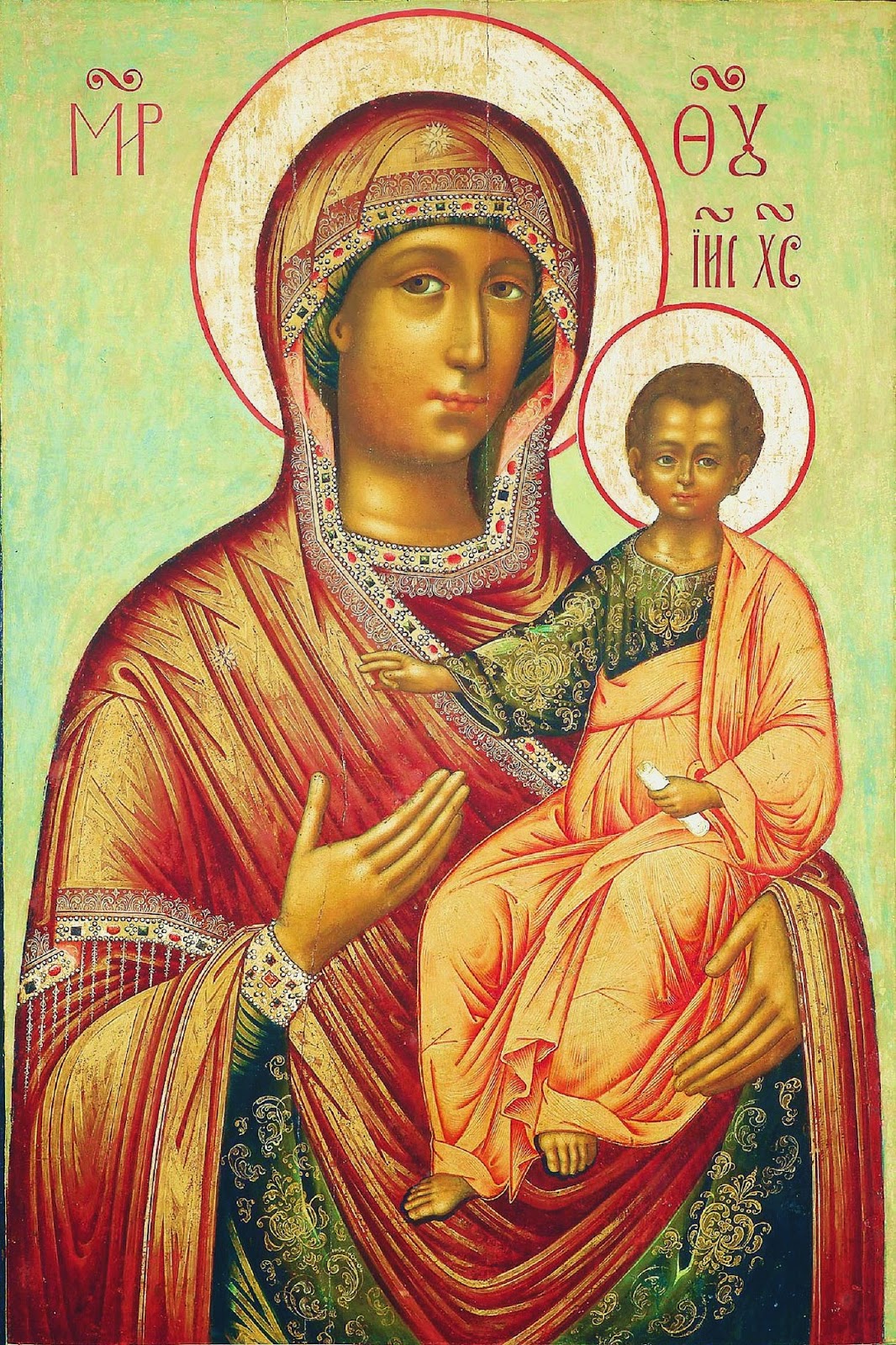
The Solid Foundations Course is designed as a starting point for anyone yearning to explore the depths of their spiritual life. If you’ve established the basics of faith – attending Sunday Mass and praying regularly – and now find yourself asking, “Is there more?” or “How can I grow closer to the Lord?” then this course is for you.
Who Will Benefit from This Course?
This course is ideal for those seeking to:
Build a more profound and personal connection with the Lord.
Lay a strong foundation for spiritual growth, guided by the wisdom of the Church’s great spiritual writers, including St. John of the Cross, St. Teresa of Avila, and St. Thérèse of the Child Jesus.
What You’ll Learn
The Solid Foundations Course provides practical knowledge and guidance to help you deepen your spiritual journey. You’ll gain insight into two transformative forms of prayer:
Lectio Divina
Learn to listen to God through Scripture.
Discover how to integrate His Word into your daily life.
Prayer of the Heart
Connect with God on a deeper, more intimate level.
Experience His nourishment and presence through contemplative prayer.
These practices extend and enrich the graces of the Mass, helping you “digest” God’s Word and live the Eucharist in your daily life.
Key Features of the Course
Rich and Practical Content: A detailed exploration of spiritual growth and prayer practices.
Climate of Prayer: Sessions foster silence, recollection, and deep reflection.
One-on-One Guidance: Participants can ask questions and schedule private online sessions with the instructor.
Certification: Completion certificates awarded – no exams, no essays, just commitment to the journey.
Accessible to All: No prior courses are required to enrol.
Why Choose the Solid Foundations Course?
This course has been developed with the approval and blessing of H.E. Peter Smith, Archbishop of Southwark, UK. As with all School of Mary programmes, Our Lady, Mother of Jesus, is the Patroness of this course.
Course Cost
The course fee is $280 / £210 / €240. We are committed to making spiritual formation accessible, so please reach out if financial concerns arise.
How to Enrol
You can take this course as a pre-recorded, on-demand programme. To enrol:
Send us an email explaining your interest in this course.
After confirmation and payment, you’ll receive access to the course playlist.
You’ll have the opportunity to email questions and request additional one-on-one support sessions with the instructor.
Course Syllabus at a Glance
Part 1: Introduction & Lectio Divina
Introduction to Spiritual Life: Its goals and stages.
Lectio Divina: Listening to God’s Word and applying it to life.
Guided sessions and insights into biblical interpretation.
Part 2: General Laws of Spiritual Life
Understanding the dynamics of faith, hope, and love.
Recognising and navigating spiritual challenges.
Exploring Christ and the Holy Spirit roles in spiritual transformation.
Part 3: Prayer of the Heart
Introduction to contemplative prayer: History, method, and practice.
Practical guidance on focusing the mind and heart on God.
Exploring God’s action and response in prayer, including the “Prayer of Quiet.”
This course is more than an introduction – it’s an invitation to encounter God in a transformative way. Lay the foundation for a lifetime of spiritual growth and intimacy with the Lord.
During the last days of Advent, the seven days that precede the birth of the Lord, the Church uses the ‘O Antiphons’ which all start in a similar manner: ‘O Wisdom…’, ‘O Sacred Lord…’, ‘O Root of Jesse…’, ‘O Key of David…’, ‘O Radiant Dawn…’, ‘O King of all the nations…’, ‘O Emmanuel…’. (See Antiphons at the end of this article)
These antiphons are called the ‘O Antiphons’, because they all open with a literary expression of longing: ‘O’. This short expression, i.e. ‘O’, embodies and voices a deep longing, a suffering that calls for the Redeemer, the Saviour, who alone can save us from our darkness and suffering, our prison of sin that distances us from God. Each day, the ‘O’ is accompanied by one of seven different names of the Messiah Saviour.
These Antiphons belong to Vespers (Evening Prayer), and they are placed right before the Magnificat – Mary’s Prayer – and are repeated after it. They Crown the Magnificat. Why? What, then, is their true meaning? How are we ourselves praying them?
We, on the other hand, take His coming into the world for granted. We take Christmas Grace for granted, as if humanity has no role to play in it. But calling Him, attracting Him is a very important and vital mission in our spiritual life.
But it is very important to notice that before receiving Him in her heart and flesh, she exercised a very forceful and unique power of attraction over God, almost extracting Him from His Eternal sojourn, with her unfathomable yearnings and longings. Who can understand Mary’s prayer before the Annunciation? Who can understand the immense power of attraction her prayer has over God?
In light of this, then, we can safely assume that these seven Antiphons are first and foremost hers. Nobody can utter them in a fruitful way outside of Mary. Let us remember St. Bernard’s teaching in his famous sermon ‘Super Missus Est’ : the whole world, he seemed to say, was suspended to your lips waiting for you to say ‘yes’ to the Angel. This was the case because nobody was capable of believing and receiving the Lord. This same truth of our incapacity should also be applied to her yearnings. Nobody was able to attract the Lord except her. Her prayers alone were able to exercise this unique effect over God, to make Him come out of himself, become incarnate in her. She hastened His coming by attracting Him so powerfully.
We just simply, and much later, become aware that she uttered her yearnings while having all humanity in Her Heart. i.e. she uttered these yearnings both in her name and in ours. We become aware that because of her immense charity, containing all of us in her heart, and our yearning for the Messiah, these Antiphons become ours. What a mystery!
As a consequence, entering in Her, and being united to her, while understanding all together the mystery of her longings and of the charity toward us, we feel we are called to take the place that God had reserved for us in Mary during her Yearnings and so yearn with her, in her.
Let us, then, join in Mary’s Longings, and by her powerful prayer attract the Lord to Our thirsty world wandering in the darkness (Isaiah 9:1).
Maybe this is the reason why the Angel says to Mary: ‘you have found favour with God’ (Luke 1:30). i.e. your yearnings Mary have achieved their Goal, you are attracting the Messiah. You hastened His Coming. Your yearnings Mary are marvelous and pleased God because you weren’t yearning and attracting God in your name only, but in the name of all humanity. You pleased God and seduced Him, so that He hastened and came to dwell in your heart and in your womb.
Today, by joining Mary and by praying the Antiphons, we fulfil our role toward all our brothers and sisters who do not know Jesus, even those Christians who are very far from God or lukewarm or who have regressed in their journey of growth. We have an important role to play, but ‘in Mary’… indeed, these yearnings are a very deep mystery.
It is important to pray this way during the day. As the day progresses, we can repeat the first part of them as a short ejaculatory prayer, or short prayer, or arrow prayer, or aspiration. It is of the essence to join Mary in her prayer and increase Her Yearning to attract the Messiah for our brothers and sisters. We can ask God to shower amazing graces on our world. Let us play our role to its fullness, i.e. in Mary.
Each Antiphon is supposed to exercise the power of attraction over God. If it starts with an ‘O’ that embodies our call and prayer, it ends with a powerful: ‘come…’. Let us, then, unite ourselves to Mary, let us understand that she is the one par excellence who says to the Lord: ‘Come…” and let us humbly join her in saying fervently, with her and in her to the Lord Jesus: ‘Come…’ to our world… shower your infinite and incredible unexpected Mercy on all of us thirsty for Light and Love, and the New World.
Who can understand the power the New Eve has over God? Here are some very deep indications in the Scriptures:
‘You have captivated my heart, my sister, my bride; you have captivated my heart with one glance of your eyes, with one jewel of your necklace. How beautiful is your love, my sister, my bride! How much better is your love than wine, and the fragrance of your oils than any spice!’ (Song of Songs 4:9-10)
‘A garden locked is my sister, my bride, a spring locked, a fountain sealed. Your branches are an orchard of pomegranates with the choicest of fruits, with henna and nard, nard and saffron, calamus and cinnamon, with all trees of frankincense, myrrh and aloes, with all choice spices—a garden fountain, a well of living water, and flowing streams from Lebanon.’ (Song of Songs 4:12-15)
‘You are beautiful as Tirzah, my love, lovely as Jerusalem, awesome as an army with banners. Turn away your eyes from me, for they overwhelm me — Your hair is like a flock of goats leaping down the slopes of Gilead.’ (Song of Songs 6:4-5)
‘How beautiful and pleasant you are, O loved one, with all your delights! Your stature is like a palm tree, and your breasts are like its clusters.’ (Song of Songs 7:6-7)
‘the fragrance of your breath like apples, and your mouth like the finest wine. May it flow smoothly to my beloved, gliding gently over lips and teeth. I belong to my beloved, and his desire is for me. Come, my beloved, let us go to the countryside; let us spend the night among the wildflowers.’ (Song of Songs 7:9-11)
Jean Khoury
Advent 2020
Schoolofmary.org
Advent ‘O’ Antiphons
One can pray during Advent, asking for Jesus coming using the O Antiphons that we find in each Vespers, for the Magnificat, starting from the 17th December. These are deep prayers of desire, sang with Mary and under her light in order to attract the Lord:
17th December
O Wisdom, O holy Word of God, you govern all creation with your strong yet tender care: Come and show your people the way to salvation.
O Sapientia, quae ex ore Altissimi prodiisti, attingens a fine usque ad finem fortiter, suaviterque disponens omnia: veni ad docendum nos viam prudentiae.
18th December
O Sacred Lord of ancient Israel, who showed yourself to Moses in the burning bush, who gave him the holy law on Sinai mountain: Come, stretch out your mighty hand to set us free.
O Adonai, et dux domus Israël, qui Moyse in igne flammae rubi apparuisti, et ei in Sina legem dedisti: veni ad redimendum nos in brachio extento.
19th December
O Root of Jesse, you have been raised up as a sign for all peoples; kings stand silent in your presence; the nations bow down in worship before you. Come, let nothing keep you from coming to our aid.
O Radix Jesse, qui stas in signum populorum, super quem continebunt reges os suum, quem gentes deprecabuntur: veni ad liberandum nos, jam noli tardare.
20th December
O Key of David, O royal Power of Israel, controlling at your will the gate of heaven: Come, break down the prison walls of death for those who dwell in darkness and the shadow of death; and lead your captive people into freedom.
O Clavis David, et sceptrum domus Israël, qui aperis, et nemo claudit, claudis, et nemo aperuit: veni, et educ vinctum de domo carceris, sedentem in tenebris, et umbra mortis.
21st December
O Radiant Dawn, splendor of eternal light, sun of justice: Come, shine on those who dwell in darkness and the shadow of death.
O Oriens, splendor lucis aeternae, et sol justitiae: veni, et illumina sedentes in tenebris, et umbra mortis.
22nd December
O King of all the nations, the only joy of every human heart; O Keystone of the mighty arch of man: Come and save the creature you fashioned from the dust.
O Rex Gentium, et desideratus earum, lapisque angularis, qui facis utraque unum: veni, et salva hominem, quem de limo formasti.
23rd December
O Emmanuel, king and lawgiver, desire of the nations, Savior of all people: Come and set us free, Lord our God.
O Emmanuel, Rex et legifer noster, expectatio gentium, et Salvator earum: veni ad salvandum nos, Domine, Deus noster.
Drop down, ye heavens, from above, and let the skies pour down righteousness.
Ne irascáris Dómine, ne ultra memíneris iniquitátis: ecce cívitas Sáncti fácta est desérta: Síon desérta fácta est, Jerúsalem desoláta est: dómus sanctificatiónis túæ et glóriæ túæ, ubi laudavérunt te pátres nóstri.
Be not wroth very sore, O Lord, neither remember iniquity for ever: thy holy city is a wilderness, Sion is a wilderness, Jerusalem a desolation: our holy and our beautiful house, where our fathers praised thee.
Peccávimus, et fácti súmus tamquam immúndus nos, et cecídimus quasi fólium univérsi: et iniquitátes nóstræ quasi véntus abstulérunt nos: abscondísti faciem túam a nóbis, et allisísti nos in mánu iniquitátis nóstræ.
We have sinned, and are as an unclean thing, and we all do fade as a leaf: and our iniquities, like the wind, have taken us away: thou hast hid thy face from us: and hast consumed us, because of our iniquities.
Víde Dómine afflictiónem pópuli túi, et mítte quem missúrus es: emítte Agnum dominatórem térræ, de Pétra desérti ad móntem fíliæ Síon: ut áuferat ípse júgum captivitátis nóstræ.
Behold, O Lord, the affliction of thy people, and send forth him whom thou wilt send; send forth the Lamb, the ruler of the earth, from Petra of the desert to the mount of the daughter of Sion: that he may take away the yoke of our captivity.
Vos testes mei, dicit Dóminus, et servus meus quem elégi; ut sciátis, et credátis mihi: ego sum, ego sum Dóminus, et non est absque me salvátor: et non est qui de manu mea éruat.
Ye are my witnesses, saith the Lord, and my servant whom I have chosen; that ye may know me and believe me: I, even I, am the Lord, and beside me there is no Saviour: and there is none that can deliver out of my hand.
Consolámini, consolámini, pópule méus: cito véniet sálus túa: quare mæróre consúmeris, quia innovávit te dólor? Salvábo te, nóli timére, égo enim sum Dóminus Déus túus, Sánctus Israël, Redémptor túus.
Comfort ye, comfort ye my people; my salvation shall not tarry: why wilt thou waste away in sadness? why hath sorrow seized thee? Fear not, for I will save thee: For I am the Lord thy God, the Holy One of Israel, thy Redeemer.
In the sacramental liturgy of the Church, the mission of Christ and of the Holy Spirit proclaims, makes present, and communicates the mystery of salvation, which is continued in the heart that prays. The spiritual writers sometimes compare the heart to an altar. Prayer internalises and assimilates the liturgy during and after its celebration. Even when it is lived out “in secret,” prayer is always prayer of the Church; it is a communion with the Holy Trinity.” (CCC2655)
This year (2024) dedicated by Pope Francis to Prayer is a great opportunity for us to explore and deepen the multifaceted and intimate relationship between liturgy and prayer. The topic has been the subject of studies and debates during the time prior to Vatican II and it has continued long afterwards[1]. My perspective will be that of Spiritual Theology.
Personal vs. Private Prayer
Let us address Prayer first. By “prayer” we mean the personal relationship between the faithful and God. Since we are baptised in Christ, we not only relate to Christ the Head, but we also belong to Christ the Body. Therefore, any prayer is a “common prayer”. This is why when the Lord taught us to pray, from the first movement of the prayer He invited us to be aware that we are not isolated individuals. He taught us to say: “Our Father” and not: “My Father”. In this sense we need first to be aware of this dimension in prayer. We are never alone. We belong to Jesus’ mystical Body. We can never dissociate ourselves from our brothers. Even worse, the Lord taught us to ensure this communion with our brothers even before praying: when “you present your offering to God” (see Mt. 5:24), i.e. when you are praying, and you remember that there is something unresolved with your brother, go and fix this first
In this sense wherever any of the faithful is praying in Spirit and in Truth, he or she is praying in Christ, the Truth, and in His Spirit and therefore all of Christ, head and body, is present. In this sense, the hermit in his remote cave in the desert is part of Jesus’ Body and his prayer is always the Church prayer. This is why, traditionally, the vocation for hermitic life has to be first tested in a coenobitic environment to allow true charity to grow.
Fr. Jesus Castellano OCD underlined an important point: the Church is found at the centre of the heart of the person who prays[2]. When we pray in solitude, we are never alone. We could be tempted to transform our prayer into a “private” exercise. It is an illusion to build one’s spiritual life in an isolated individualistic way. It is a temptation, the temptation of the beginner. But when our relationship with Jesus grows, when we are introduced into the mystery of his body, when He allows us to see his presence in each and every one of our brothers and sisters, then charity grows and our prayer embraces all Jesus’ Body, not only the ones who are already in his Body, i.e. baptised, but also all God’s children scattered around the world[3] (see Eucharistic Prayer III).
In this sense, if we want to talk about prayer here, about true prayer, made in Spirit and in Truth, it can never be “private” in the sense that it is about me and my God only.
Ritual Liturgy vs Prayerful Liturgy
When I will talk here about “liturgy” I will be focusing more on the Eucharist. By no means, however, do I exclude all other liturgical forms of prayer.
The temptation, here, is to see and experience liturgy more as a ritual rather than a wholesome divine action. In this sense one would be focusing more on the exterior aspects of liturgy. True worship is “in Spirit and in Truth” (John 4:23-24) says the Lord.
We can face many temptations when we participate in the Mass. These tend to reduce its deep meaning and its fruitfulness. Routine, ritualism, lack of attention, lack of interior recollection, lack of true contemplation[4],… all contribute to our weak spiritual state, and we are all tempted to fall into these lazy attitudes. All these attitudes, coming from the Celebrant as well as from the faithful, diminish the fruitfulness of the Celebration in our life. Vatican II, however, insists on this by saying that the more the Priest is united to the Lord, the more fruitful is his ministry. These are by no stretch of the imagination mere words. In fact, on the day of his ordination the Bishop reminds the priest to pay attention to what he celebrates and also to conform his life to what he celebrates[5].
The priest himself in the Mass has various opportunities to enter into the depths of the worship in Spirit and in Truth. Thus, when he starts the Mass, he first of all “climbs up” to the Altar: “Introibo ad altare Dei” (Psalm 42), when not only does he start the divine action by reminding us about the grace of our Lord, the Love of God the Father and the communion of the Holy Spirit, but then the recollection and examination of conscience, introduce our conscience more clearly into our “inner room” (Mt. 6:6).
Subsequently, for the Gospel we have a procession with the Evangeliarium, which reminds us that the Lord walked among us and is still doing so. Then we greet Him by saying: “Alleluia”. Then this sets the scene for the invocation of the Holy Spirit to listen to Jesus, who during the Proclamation will speak to the heart of each of the faithful present (see Armenian and Byzantine Rites). “He [Christ] is present in His word, since it is He Himself who speaks when the holy scriptures are read in the Church.” (Vatican II, SC7)
Note: There are no transparent windows in a church because the focus is on what is happening inside, on the Lord who comes to meet us. Visible to the eyes of Faith. In ancient times in the second part of the Mass, the Eucharist, the catechumens were sent out and the doors of the church were closed. When Jesus appears to the Apostles in John 20 the doors are closed. It showed that the accounts of his apparition in John 20 were very probably an allusion to the weekly gathering (Sunday).
Note: In the Byzantine liturgy, various times during the Divine Liturgy, the Priest says: “Peace be with you”, which is what the Lord says when he appears to the Apostles in John 20.
Further on in the Mass the major invitation comes to enter into the great mystery of the Liturgy of the Eucharist: “lift up your hearts”. The Priest here, while lifting up his arms should be making an interior movement, and by doing so, attracting and lifting his brothers and sisters to communion with God in the Holy Spirit.
One can continue of course. Hence, after the Consecration, the Priest mystically introduces the three “churches” (church militant triumphant and suffering) into Christ now consecrated and prays for all humanity: he mentions the saints, asking for their intercession; introduces all the faithful and all God’s children; he also mentions all those who have died and are waiting to see God. Then comes the great moment of lifting not only Jesus’ Body and Blood to the Father in the Spirit to worship Him, but also of elevating all the people, all the persons he has just mentioned, who are in Jesus’ Body. He represents Christ the High Priest who alone can lift, through his powerful prayer, all the people of God to God the Father in the Holy Spirit, accomplishing here true worship.
Of course, our weakness makes us perform these acts in a rapid, routine way. But isn’t this Jesus’ Prayer? Aren’t we invited to enter in Jesus and pray with Him and in Him? Isn’t this prayer universal, embracing all humanity, past, present and future? Isn’t this the essence of our prayer? Can any prayer depart from this final movement of elevation and worship that the priest performs “in persona Christi”?
Of course, the Mass continues, and we move on to the Communion rites.
The Our Father here, collectively prayed aloud, acquires its perfect density. It is said together, in the spirit of peace and reconciliation with all our brothers, in preparation for receiving the Bread of Jesus’ Body and Blood.
How do we live this moment of communion? The minutes after it? The recollection within ourselves? The silent contemplation and immersion in Jesus’ love? Do we allow the Lord to act in us in his marvellous silent deep action? Do we give time for his Blood to run in our veins to reinvigorate us? Do we take time, allowing the One who Prays in us, Jesus, to irrigate our body, soul, spirit with his divine redemption, blood, soul, spirit and divinity?
Eating is one thing. Digesting another. Assimilating is yet another thing. And finally acting in Him, becomes quite another thing. This way the Mass is alive, it penetrates us, elevates us, introduces us into Christ. This is the heart of Prayer. This is the core of our day, of our week. This is why the Eucharist is the summit of our day or week, and this is why the Eucharist is the source of our day and week: Jesus is the Source and, in the Mass, we have the opportunity of receiving the entire mystery of Jesus: his Word and his Body.
Digesting Jesus: The Liturgy of the Word
We have just witnessed the core of what prayer is. In fact the Mass with all its divine structure and parts, with all its mystery, with all its capacity of wholesomeness, sets the true tone for any prayer. It is the cerebral spine of any prayer. In it we find, day after day, an infinity of aspects, never boring, never exhausted. Every day it is new, every day one aspect of the multifaceted mystery of Christ shines forth for us. The richness of one Mass, of one Mass only, could be enough to feed an entire lifetime. In it we have everything. We have all of Jesus. It is an open book we are invited to explore, day after day. Nobody can exhaust the width, length, height, and depth of the Mass, because all Christ is there, given to us. The Mass teaches us to pray. The Mass helps us discern what true prayer is. It pushes urges us to come out of ourselves and be placed in Christ. It pushes us out of our comfort zone, it shows us the right “orthodoxy” of prayer.
By contrast, the danger we face is following the Mass as a routine. This first danger is to really not enter into the grace of being recollected during Mass. Yes, there is a grace of recollection given to all of us, priests and faithful, to help our weakness of entering into the great and immense mystery of the Mass. Do we know how to receive this grace? Are we taught how to?
The second danger we face is to eat (manducatio) the divine food offered to us in the Mass but not to digest it. The Mass is so substantial that the great risk and temptation is not to take time to digest it, assimilate it. How sad! How sad!
If we recognise that the Mass is the source of our personal prayer, then we have to question whether there is a real connection between our personal prayer and the Mass. Isn’t prayer first and foremost about receiving? What do we have that we haven’t first received from God? Isn’t it God who starts by giving to us, before asking us to give anything to Him? Isn’t it in the Mass that we find all the richness and food that God wants to give us? How could we start our personal prayer if not by living the Mass first? Living it is first during the Mass, but then follows living it during our own prayer. Our own prayer is a prolongation or extension of the Mass. Being the source of our prayer, the Mass nourishes and directs our personal prayer.
Vatican II, Dei Verbum and Sacrosantum Concilium and Verbum Domini remind us that the Word of God has to be at the centre of all liturgical prayers, but also of our personal prayer. Jesus, indeed, comes at each Mass, in an invisible but nonetheless real way, to speak to each one of us during the Proclamation of the Word. Today, thank God, we talk about the Sacramentality of the Proclamation of the Word (see Verbum Domini, 56). This sacramentality should be lived. The sacrament doesn’t end with the end of the rite. It nourishes the rest of the day. So what Jesus came to tell me, (the Divine Word He came during the Mass to give me personally, in my heart), I need to take time to receive, hear, understand, and listen to Him and put it into practice. Otherwise, how can we talk about a “sacramentality” of the Proclamation? In fact during the Proclamation there is a unique grace for each of the faithful present (and I dare to say: absent). A sacrament is a visible sign of an invisible grace. The Proclamation has the voice of the reader (the visible sign) and has Jesus talking in the heart of each faithful (the invisible grace). Sadly however, the Liturgy of the Word, the sacramentality of the Proclamation, because of human weaknesses, goes by too quickly and we often miss the grace. But isn’t this grace still given to us? Does God take back his graces? Never! We need not miss this grace. Therefore, one can see to which extent liturgy (here the Proclamation) is the source of our personal prayer: we need to pause, to sit down, to open the readings of today’s Mass, and do all that is necessary to receive the Grace the Lord wants to give us today, to nourish us, transform us. Putting into practice his received word is essential. It is not an abstract prayer or contemplation. That would be an illusion. What we need is to do is to listen and put into practice what Jesus tells us today. And each day has its own bread.
Here our prayer finds itself intimately linked to liturgy. One finds it impossible to disentangle them.
As we see, Liturgy with all its richness structures and orientates our personal prayer. The relationship between them is direct; more so liturgy shapes our personal prayer. Jesus comes first, He initiates the dialogue, He initiates our prayer, He talks to us. Without his starting to talk we cannot talk back. He is the first one, the Giver. He is the Source of our Prayer.
Digesting Jesus: The Liturgy of the Eucharist
The second part of the Mass, the Liturgy of the Eucharist has such incommensurable richness impossible to address here in all its aspects: the work of our Redemption is accomplished, Intercession of Christ for the Church made, Praise given, etc. I will only talk about one aspect: the very moment of Communion. Here also, we receive the Sacrament of Communion. We receive all of Christ: body, blood, soul, spirit and divinity. Because of human weakness, we spend very little time allowing Jesus to really nourish us. This is the Sacrament of Sacraments: the entire Jesus himself is received. Who can understand the immense kindness and generosity of God here? The question we ask is: do we really benefit from this Sacrament? Can the three minutes we are prayer after receiving it be enough to allow Jesus to nourish us? No. This is why we should say that liturgy is the source (fountain) which nourishes our personal prayer. Adoration, silent prayer, Jesus’ prayer, contemplative prayer, the arrow prayer, are all a prolongation of our last Communion[6]. We receive Jesus in the Eucharist, we are living Tabernacles, He is stored in our heart, He doesn’t abandon us, He never takes back the grace He has given us. So what we need to do, is to take a silent moment daily (it can be 30 minutes, two 30 minutes, or two x 60 minutes) and enter into our heart – our “inner room” – and open the tabernacle of our heart and find Jesus and stay with Him. This will allow our last Communion to give forth its maximum fruits in our life.
Pope Benedict reminded us of this very deep theological connection between personal and liturgical prayer when he said: “God’s altar is our heart”: ““in the sacramental liturgy of the Church, the mission of Christ and of the Holy Spirit proclaims, makes present, and communicates the mystery of salvation, which is continued in the heart that prays.” Spiritual writers sometimes compare the heart to an altar” (CCC 2655): “Altare Dei est cor nostrum.”“[7]It is also an image used by St. John of the Cross. The reflection between the objective outer liturgy happening at the Altar and the inner one occurring in our heart[8] is something very deep and sheds an incredible light on the baptismal priesthood and the necessity of developing it, and of noticing how it grows with our spiritual growth until it reaches its culmen with a perfect syntony between the two. Here the “fructuosa participatio”[9] reaches its fullness. This area deserves to be studied and developed more.
Conclusion
I do personally believe that not only is liturgy the source and summit of our prayer but also that the Liturgy of the Mass can offer a solid structure for a renewed Spiritual Theology. May this year dedicated to Prayer be an opportunity to each one of us, and also for our catechesis, to revive our Mass and our personal prayer, and live their deep unity. The Mass is the source and the living spring of our personal prayer, and our personal prayer is a living Mass. Of course, it goes without saying that personal prayer and liturgy cannot be separated from our daily life, and from charity. It is charity, by putting Jesus’ word into practice, which makes us grow, which makes Him grow in us and bear divine fruits.
“The liturgy is also a participation in Christ’s own prayer addressed to the Father in the Holy Spirit. In the liturgy, all Christian prayer finds its source and goal. Through the liturgy the inner man is rooted and grounded in “the great love with which [the Father] loved us” in his beloved Son. It is the same “marvelous work of God” that is lived and internalized by all prayer, “at all times in the Spirit.” (CCC 1073)
[1] Jesus Castellano Cervera, “Liturgia y vida espiritual”, n° 27, Centre de Pastoral Litúrgica, 2006. A whole section of the book is dedicated to the topic: “Liturgia, oración personal, contemplación” with bibliography, pp. 265-281. Not to forget the issues of “Cuadernos Phase” 79 and 139, respectively: “Vida litúrgica y oración personal” and La liturgia escuela de oración”. P Jounel, “Liturgia y oracion”, in Cuadernos Phase n° 52, “Liturgia y vida espiritual”, pp.11-20.
[2] “non si può opporre la preghiera interiore, libera da ogni forma tradizionale, «pietà soggettiva», alla liturgia, che è la «preghiera oggettiva» della Chiesa. Ogni autentica preghiera è preghiera della Chiesa: mediante ogni preghiera sincera qualcosa avviene nella Chiesa ed è la Chiesa stessa che prega perché è lo Spirito Santo, che in essa vive, che in ogni singola anima «prega per noi con inenarrabili sospiri”, the quote is from St. Edith Stein, “La preghiera”, pp. 29-30; GDK, 21-22. quoted in Jesus Castellano OCD, “Edith Stein, la preghiera della Chiesa”, (http://www.nostreradici.it/EdithStein-preghiera.htm). See opus cit. Jesus Castellano Cervera, “Liturgia y vida espiritual”.
[3] “in your compassion, O merciful Father, gather to yourself all your children scattered throughout the world” (Eucharistic Prayer III)
[4] See the efforts made by Laurence Freeman OSB to explore a more contemplative Mass and his article: “The Contemplative Parish” in, “Priests & People”, June 2002, pp. 218-222. Translated online here: “La parroquia contemplativa”.
[5] Ordination rite: “Accept from the holy people of God the gifts to be offered to him. Know what you are doing, and imitate the mystery you celebrate; model your life on the mystery of the Lord’s cross.” Also: “they are asked to take example from that with which they deal” (Vat II, P.O. 13).
[6] See “Preghiera del cuore e Messa” in Jean Khoury, “Preghiera del cuore alla scuola di Maria”, Edizioni Segno, 2009, pp. 115-137.
[8] Regarding the relationship between the external liturgy at the altar and the internal liturgy in our heart see “l fuoco di Maria”, Jean Khoury, “Andiamo alla scuola di Maria, come entrare nel mistero di Maria”, Edizioni Segno, 2009, pp. 244-269. See also : Jean Khoury, « Mary’s Fiery Prayer, Trinity, Altar, Fire and Offering », Amazon, 2018.
[9] Pope Benedict in his different studies and publications tried to deepen the “Fructuosa participatio” suggested more than once in the documents of Vatican II. See “active participation” in Joseph Ratzinger, “Collected Works, Theology of the Liturgy”, 2014, pp. 106-110. Deepening it would greatly serve in the formation of seminarians also. See “La nozione di “partecipazione alla Liturgia” secondo il Vaticano II” in Jean Khoury opus cit. pp. 264-269.
The goal of this book is to help the faithful to live better the Mass, to enter into the grace of the Mass, to understand what God wants to give us and how we can benefit from the graces of the Mass. The Mass has everything in it; it is the summary of the Gospel; it is the summary of Jesus’ life; it contains God’s entire gift for us. One Mass would be enough! Its richness is incommensurable. With the help of the great masters of spiritual life like St. Teresa of Avila we can enter more deeply in the Mass and benefit from its immense richness. Liturgy is Prayer. Liturgy is the norm of Prayer. Liturgy is the source and summit of our prayer. Have we explored the depth and richness of Liturgy? We often remain fixed on the exterior acts of worship and forget that true worship is “in Spirit and in Truth” (John 4:23-24), that we have an altar in our heart because of the Baptismal Priesthood and that we are called to participate in the Mass in a deep and way. St. Teresa of Avila teaches us contemplation –i.e. God’s intervention in our prayer which elevates us in Him– but she recommends a more perfect prayer, a prayer which unites “vocal prayer” and “mental prayer” (the Prayer of the Heart). We can say the same about liturgy: to live liturgy in a more perfect way we need to unite the exterior rites with an inner participation which leads to true contemplation. This book is composed of various articles published on the website of the School of Mary (www.schoolofmary.org). One might find some repetitions, but in spiritual life, repetition is always beneficial. 1- The Specificity of Christian Prayer 2- The Immersion in the Trinity 3- Liturgy as Prayer 4- Two Types of Contemplation 5- Lectio Divina and Contemplative Prayer According to Carmelite Spirituality 6- Raising Awareness of the Liturgy of the Word 7- Proposal for a Celebration of the Liturgy of the Word 8- Prayer of the Heart and Communion 9- Transfiguration and Mass 10- Mary’s Fiery Prayer
A few years ago, “Lectio Divina at the School of Mary” was published, a work originally written in 2001. The teaching of Lectio Divina began in 1995 and has continued to develop since then. Over time, a significant challenge emerged: many individuals noticed that the daily readings often conveyed the same message. The Lord was beginning to impart His supernatural light, with the Holy Spirit acting directly and personally. However, the light people received seemed general rather than specific, practical, or precise. As a result, Jesus’ will often appeared unclear, leaving people uncertain if they were truly listening to Him or practicing Lectio Divina correctly. The key was to persist in prayer until the light became clear and Jesus’ will certain. This crucial aspect, however, was not sufficiently emphasised or explained in the first book. Therefore, the purpose of this new book, Finished and Unfinished Lectio Divina, is to assist all who have begun practicing Lectio Divina, as outlined in the first book or in the Solid Foundations Course, and need clarity on this issue. Additionally, articles published on the website have been included in this book. (Amazon USA – Amazon UK)
Igniting the Fire of Our Faith
This book is for each person who wants to ignite and nurture their personal faith. The first part of the book essentially presents Christ as the centre of our faith. In the second part, the author shows that faith can grow and provides practical explanations on how to nourish it by offering various means for it to do so, all complementary and rooted in the Tradition of the Church. The last part in particular is specifically dedicated to the growth of faith. The wisdom and practical advice found in this book are presented in the simple form of “100 questions and answers,” making it very accessible at all levels. Faith is both a challenge and a great help for our lives. With this in mind we must face our doubts and put into practice the directions and ways offered in this book in order to see our faith ignite again and grow. “Mary, you who have believed, make us participants in the purity of your Faith, your adherence to the Word of your Son, your commitment to follow Him to the end with the strength of the Holy Spirit.” “May this Year of Faith [2012-2013] make the relationship with Christ, the Lord, ever stronger, for only in Him do we have the certainty to look to the future and the guarantee of an authentic and lasting love.” — Benedict XVI (Amazon USA – Amazon UK) (Table of Contents click here)
Praying the Mass
The goal of this book is to help the faithful to live better the Mass, to enter into the grace of the Mass, to understand what God wants to give us and how we can benefit from the graces of the Mass. The Mass has everything in it; it is the summary of the Gospel; it is the summary of Jesus’ life; it contains God’s entire gift for us. One Mass would be enough! Its richness is incommensurable. With the help of the great masters of spiritual life like St. Teresa of Avila we can enter more deeply in the Mass and benefit from its immense richness. Liturgy is Prayer. Liturgy is the norm of Prayer. Liturgy is the source and summit of our prayer. Have we explored the depth and richness of Liturgy? We often remain fixed on the exterior acts of worship and forget that true worship is “in Spirit and in Truth” (John 4:23-24), that we have an altar in our heart because of the Baptismal Priesthood and that we are called to participate in the Mass in a deep and way. St. Teresa of Avila teaches us contemplation –i.e. God’s intervention in our prayer which elevates us in Him– but she recommends a more perfect prayer, a prayer which unites “vocal prayer” and “mental prayer” (the Prayer of the Heart). We can say the same about liturgy: to live liturgy in a more perfect way we need to unite the exterior rites with an inner participation which leads to true contemplation. This book is composed of various articles published on the website of the School of Mary (www.schoolofmary.org). One might find some repetitions, but in spiritual life, repetition is always beneficial. 1- The Specificity of Christian Prayer 2- The Immersion in the Trinity 3- Liturgy as Prayer 4- Two Types of Contemplation 5- Lectio Divina and Contemplative Prayer According to Carmelite Spirituality 6- Raising Awareness of the Liturgy of the Word 7- Proposal for a Celebration of the Liturgy of the Word 8- Prayer of the Heart and Communion 9- Transfiguration and Mass 10- Mary’s Fiery Prayer
Our Christian life can be divided in two periods, one before hearing Jesus’ Call, and one after. This book addresses aspects of Jesus’ Call that can easily be overlooked and delves into the difference between merely knowing that God calls all the baptised to holiness and truly hearing Jesus’ personal Call in our hearts at a specific point in our lives. (Amazon US – Amazon UK)
God Loves You
“Jesus looked at him and loved him.” (Mk 10:21). We can easily overlook this passage. We think that it is not for us. Who understands the extent of Jesus’ love for each one of us? How many people know that Jesus’ love is the starting point of Christianity? The starting point of our day? The starting point of our prayer? He always has the initiative… always. He searches for us much more than we search for Him, his Thirst to give himself to us is infinite and his Love is unconditional. For many reasons we tend to forget his Love, doubt it and not open ourselves to His Love. This book is meant to strengthen our faith in Jesus’ unconditional love. It closely follows the Scriptures. (Amazon US – Amazon UK)
Our Lady of Mount Carmel is usually the patron feast of both the Old Observance the Reformed Carmelite orders. She is also the Patroness of all those who wear the brown Scapular. But at the same time, this feast is inscribed in the Universal Liturgical Calendar, so it is not a “private” feast for a particular religious order or a particular devotion. Mary seen as “Our Lady of Mount Carmel” is a side of Mary that belongs to the entire Church. Let us remember for instance that the last apparition of Our Lady of Lourdes was on the 16th July, the Feast of Our Lady of Mount Carmel.
What is the meaning of Mary being “Our Lady of Mount Carmel” and what is the impact of this feast on the entire Church?
Let us examine the Collect (first prayer in the Mass that the Priest says) of that day: “May the venerable intercession of the glorious Virgin Mary come to our aid, we pray, O Lord, so that, fortified by her protection, we may reach the mountain which is Christ. Who lives and reigns with you in the unity of the Holy Spirit, one God, for ever and ever.”
First and foremost we see that the Mountain – is “Mount Carmel” – symbolises Christ himself. But this is not enough. Christ is presented in two forms in this prayer: as a goal and as a means. As a goal, the prayer says: “we may reach the (top of the) Mountain”. As a means, we know that Jesus is the way (“I am the way…”). So the central concept of that prayer is the ascent to reach the fullness of Christ… We climb until we reach the measure of Christ’s height, as St. Paul puts it in one of his letters (see Ephesians 4:13).
This central concept is the core of spiritual life: growth, transformation, sanctification (divinisation) until we reach union with Jesus, and fullness of Charity. As we see, the main concern of this feast is not Mary, but spiritual growth, allowing Christ to grow in us, and us in Him, until we reach the fullness of the height of his love.
The prayer uses a very common expression to describe the role of Mary in the ascent: “the aid of the venerable intercession of the glorious Virgin Mary”.
The key point is that Mary first and foremost is “the glorious Virgin Mary”, she is the one who is dwelling at the height of Jesus Christ, united to Him. She reached the fullness, she knows Him and loves him in the most perfect way (see Catechism: 148-149, 165, 273, 411, 466-469, 484-506-511, 529, 721-726, 773, 829, 963-967-975, 1014, 1172, 2617-2619, 2673-2676, 2679, 2682.).
But not only that, she also leads us, “shows us the Way” as Tradition says: Mary is Hodigitria (the one who shows the way, i.e. Jesus)) (see Catechism 2674). This is an amazing function: to lead somebody, in a pure, secure, direct and easy way, to the end of the journey (union with Jesus).
– Not only that, but Mary offers her Scapular, which is her clothing, her habit. This act is in fact a very deep one: she offers us her eyes and her heart, so we can contemplate Jesus with her eyes, and love Jesus and our brothers (Jesus’ body) with her heart (see the Preface of the Mass of Our Lady of Mount Carmel in the Carmelite Missal).
These few points show us in a very summarised way the fundamental elements of a true Christian spiritual life: defining the proper goal of spiritual life, and offering the most efficient way of reaching that Goal: Mary, gift of Jesus.
Let us remember – and this is the Gospel reading of the Feast in the Carmelite Lectionary – that this Feast acknowledges in a very powerful and clear way that Mary comes from Jesus and is his gift to us: see John 19 when Jesus on the Cross entrusts Mary to John as his spiritual mother and entrusts John to Mary as her son.
There is a less known devotional Mass to our Lady under the title of “Mother and Mistress of Spiritual Life”: see “The collection of Masses of the Blessed Virgin Mary”, Ordinary time: “The Blessed Virgin Mary, Mother and Teacher in the Spirit”.
Our Lady, it may be said therefore, has wanted a School, The School of Mary, for the spiritual good of the Church, which would dedicate itself to teaching the Spiritual Life.. The School bears the same goals explained above: reminding all Christians that the goal of our Christian life is to reach Union with Christ (the top of the Mountain) and the fullness of His Love (coming down the mountain like Jesus to give our life to our brothers). The School of Mary is led by Our Lady, “Teacher in the Spirit” (Magistra, Mistress). She knows the way to grow spiritually, she takes great care of us as we journey, and she does it in a secure way.
This is exactly what the School is all about: led by Our Lady, to revive the treasures of spiritual life, and to offer them to all the persons receiving the call to follow Jesus in whatever state of life they belong to.
The main goal of the School is to allow Our Lady to appear, shine and act as the real Teacher, Guide, Master in spiritual life.
In the School, Jesus entrusts Mary as Teacher and Master to each “student” journeying toward Him.
Saint John of the Cross said that only faith can help us reach union. In the School we could say that only Mary’s faith is the secure, short, easy, rapid way to reach union.
Mary’s Faith is given to us. As we said: her eyes are given to us so we can use them to “see” Jesus. And her heart is given to us as well, so we can use it to love Jesus (Head and Body), not with our capacity but with Hers.
Note: At Lourdes, the last apparition of Our Lady was the 16th of July 1858, Feast of Our Lady of Mount Carmel. She was silent said St Bernadette. She was the most beautiful. God’s Beauty is essential in the Carmelite Spirituality. She is called “Queen and Beauty of Carmel.”
At Fatima, in the first apparition, Our Lady appeared as Our Lady of Mount Carmel!