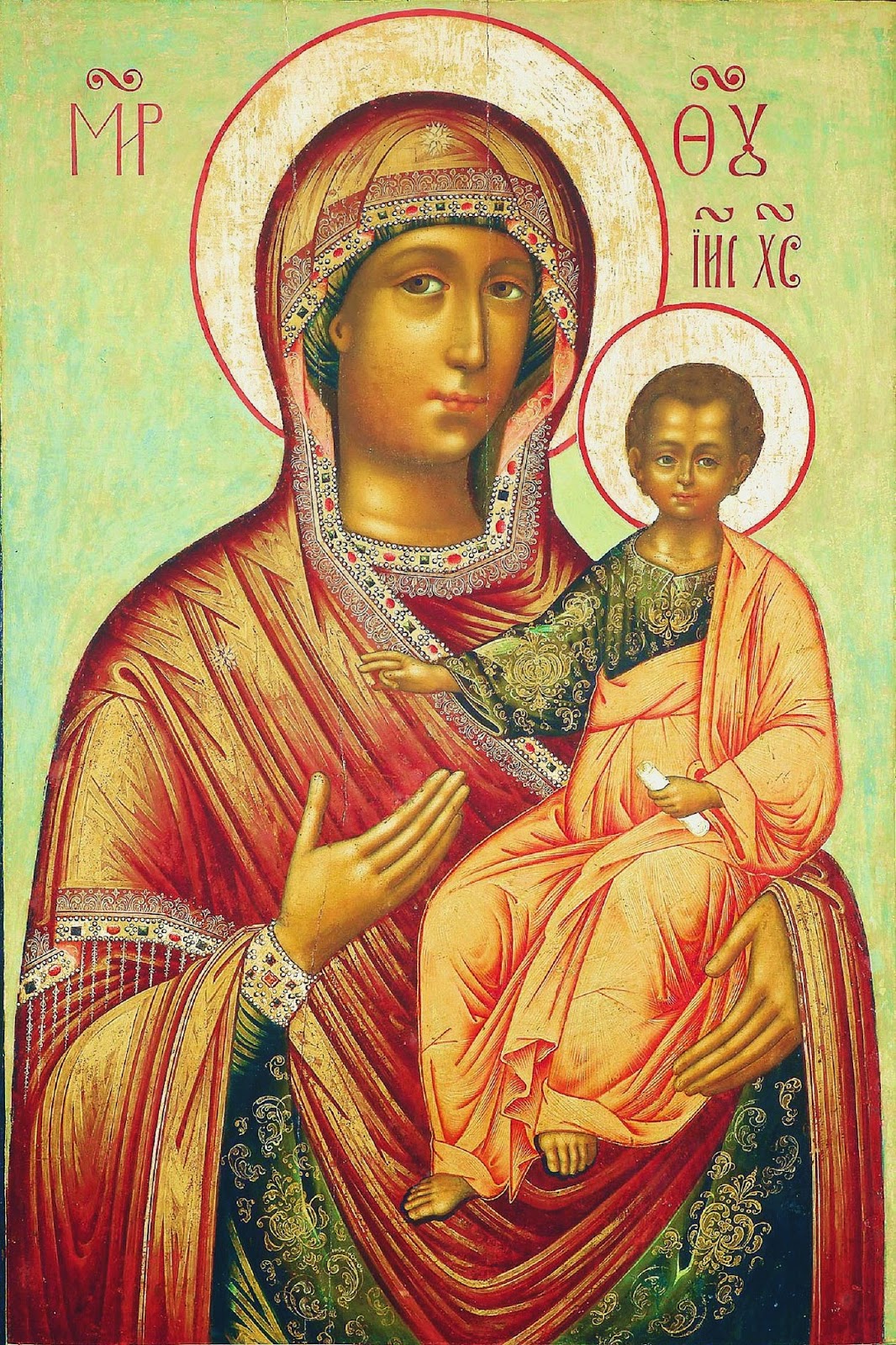
The City of God, Understanding Time and History

St. Augustine’s contribution to our understanding of time in our life is unique and remarkable. Before him, time was not perceived as linear. His profound reflections and meditations introduced the concept of linear time—a timeline with a definite beginning and end, creation and the final resurrection.

However, there is a risk that civilisations influenced by Augustine’s ideas might come to view this linear time as the sole measure. Beyond this linear framework exists another dimension of time: a time of transformation. A spiritual understanding of time and of the new journey opened up by Jesus which takes us from one form of time to another, while still here on earth. “Transformative time” transcends the linear one and leads us towards the City of God, i.e. Mary, the place of eternity and the fullness of God’s presence.

We can visualise the difference between linear time and transformative time using the analogy of an airplane on a runway. Linear time is like the runway itself—a straightforward path with a clear start and finish. By contrast, transformative time is akin to the path the airplane takes after it lifts off. As the plane accelerates and ascends, it traces a trajectory that represents exponential growth—a gentle curve ascending towards the eternal time of God, surpassing the constraints of earthly, solar time. The texture of time has thus been changed by Jesus, for instead of being closed in a linear time, He moves us from our time to eternity, paving a way through the take-off trajectory.

Mary is the place of this new time, she is the true City of God and the necessity then is to dwell in her. Of course, she can only be our dwelling place because Jesus himself made her – she is dependent on Jesus as the true Builder: if God fails to build the House, in vain do the labourers labour. Mary, thus, is the true New Jerusalem.

For those readers who would like to go directly to the explanation of the transformative process of Jesus go to Parts V and VI.

Mythological and Cultural Beliefs: In many ancient cultures, time was seen as a series of repeating cycles tied to natural phenomena, agricultural seasons, and religious rituals.

Greek Philosophy: Many ancient Greek philosophers, including the Stoics and Pythagoreans, held cyclical views of time. They believed in eternal recurrence, where events and ages repeat in a continuous cycle. Both Parmenides and Heraclitus discussed the nature of change and permanence, which indirectly involves considerations of time. Although Plato and Aristotle did not fully endorse cyclical time, their cosmological views included elements of recurrence and regular cycles, such as the eternal movement of celestial bodies. In the “Timaeus”, for example, Plato describes time as a moving image of eternity, created along with the heavens. This work presents an early cosmological perspective on time. Similarly Aristotle provided a systematic analysis of time in his “Physics,” defining time as “the number of movement in respect of before and after.” His examination is one of the most detailed from antiquity.

The “City of God” is a major work written by St. Augustine. It had a profound influence on Christian theology, philosophy, and Western thought. It provided a framework for understanding the relationship between the church and the secular world and has been a foundational text for discussions on the nature of society, politics, and history from a Christian perspective.

St. Augustine’s “The City of God” (Latin: “De Civitate Dei”) is a monumental work of Christian philosophy written between 413 and 426 AD. It was written in response to the sack of Rome by the Visigoths in 410 AD. Pagans blamed the fall of Rome on the abandonment of the traditional Roman gods in favour of Christianity. Augustine wrote this work to defend Christianity and to explain the nature of human history and the ultimate destiny of humanity from a Christian perspective. The work is divided into twenty-two books as follows:

Books I-X: Critique of Paganism

Books I-V: Augustine refutes the claim that Christianity caused the fall of Rome. He argues that Rome’s misfortunes were due to moral decay and not the abandonment of the pagan gods.

Books VI-X: He critiques pagan philosophy and religion, showing their inadequacies and contradictions, especially focusing on the ineffectiveness of Roman deities.

Books XI-XXII: The Two Cities

Books XI-XIV: Augustine describes the origin and nature of the two cities: the City of God and the Earthly City. He explains that these two cities have different destinies and are rooted in different loves: the City of God in the love of God, and the Earthly City in the love of self.

Books XV-XVIII: He traces the history of the two cities from the time of Cain and Abel up to his present day. Augustine discusses the biblical history of mankind and how it fits into the divine plan.

Books XIX-XXII: Augustine examines the ultimate fate of the two cities. He describes the Last Judgment, the resurrection of the dead, and the eternal happiness of the City of God versus the eternal punishment of the damned in the Earthly City.

The main theme shows the differences inherent in “The Two Cities”. Augustine contrasts the City of God (composed of those who live according to God’s will) with the Earthly City (composed of those who live according to human desires). The City of God represents the ideal Christian community, destined for eternal life, while the Earthly City represents the temporal, secular world, doomed to eventual destruction.

Another theme is that of “Divine Providence”: Augustine emphasizes that history is under God’s control. Hence human events, including the rise and fall of cities and empires, are part of a divine plan leading to the ultimate realization of God’s kingdom.

The saint critiques the moral and intellectual failings of pagan religion and philosophy, arguing that they cannot provide true happiness or salvation. The work concludes with a detailed discussion of Christian eschatology, including the resurrection of the dead, the final judgment, and the eternal destinies of the saved and the damned.

The Notion of Time Implied in the City of God

In “The City of God,” St. Augustine presents a complex and nuanced understanding of time, which is interwoven with his theological and philosophical ideas. His notion of time can be summarized as follows:

1. Linear and Teleological Time

Augustine views time as linear, with a clear beginning, middle, and end. This contrasts with the cyclical view of time held by many ancient pagan philosophies, which saw history as repeating itself in endless cycles. Augustine posits that time began with God’s creation of the world. Before creation there was no time, as time is a part of the created order. History unfolds in a linear progression, moving towards a divinely ordained goal. This teleological view means that history has a purpose and is directed towards the ultimate fulfilment of God’s plan. History is thus perceived as linear, progressing from creation to the final judgment, and contrasts sharply with the cyclical view prevalent in some ancient philosophies. Unlike the cyclical view of history prevalent in some ancient philosophies, what Augustine conceived, then, is teleological, meaning history has a definite purpose and direction, culminating in the fulfilment of God’s divine plan.

2. Temporal vs. Eternal

Augustine distinguishes between temporal (earthly) time and eternal (divine) time. Temporal Time is the time experienced by humans, characterized by change, succession, and the passage from past to present to future. It is finite and bounded by the creation and the eventual end of the world. Eternal Time is God’s existence outside of temporal time. God exists in an eternal present, where past, present, and future are simultaneously present. This concept emphasizes the unchanging and timeless nature of God.

Augustine critiques the cyclical and often pessimistic views of history held by pagan historians and philosophers. He argues also that their failure to recognize divine providence leads to a distorted understanding of human events and their significance.

3. The Two Cities and Time

The two cities, the City of God and the Earthly City, have different relationships with time.

The City of God is oriented towards eternity. Its citizens live in temporal time but with their ultimate aim directed towards eternal life with God. Their actions and lives are imbued with a sense of purpose that transcends earthly existence.

The Earthly City is bound by temporal concerns and finite time. Its citizens are focused on worldly affairs, power, and pleasures, often neglecting the eternal perspective.

The saint frames history as the narrative of two cities: the City of God and the City of Man. The City of God represents those who live according to God’s will and seek eternal life, while the City of Man consists of those who pursue earthly pleasures and power. These cities coexist and are interwoven throughout history, reflecting the ongoing spiritual battle between good and evil.

Augustine also explores the relationship between temporal existence and eternity. He distinguishes between the earthly city, which is transient and subject to change, and the heavenly city, which is eternal and unchanging. This distinction underscores the Christian hope for eternal life beyond the temporal realm.

4. Eschatological Time

Augustine’s eschatology, or the study of the end times, further elaborates on his notion of time. Augustine believes that temporal time will culminate in the Last Judgment, a definitive event that marks the end of human history and the beginning of the eternal state.

Resurrection and Final Judgment are pivotal events in Augustine’s understanding of time, as they transition human existence from the temporal to the eternal. The resurrection of the dead and the final judgment are moments where individuals’ eternal destinies are revealed.

Augustine’s understanding of time is deeply eschatological. He believes that the ultimate meaning of history will only be revealed at the end of time, with the Second Coming of Christ and the final judgment. This eschatological vision shapes his interpretation of historical events, seeing them in light of their ultimate significance in God’s plan.

Conclusion

In “The City of God,” Augustine’s notion of time is multifaceted. He sees time as linear and purposeful, moving towards the fulfilment of God’s divine plan. He distinguishes between temporal time, experienced by humans, and eternal time, characteristic of God’s existence. The two cities, the City of God and the Earthly City, represent different orientations towards time, with the former directed towards eternity and the latter bound by the temporal. Augustine’s eschatological views further highlight the culmination of time in the Last Judgment and the transition from temporal existence to eternal life.

Augustine emphasizes that God’s providence governs history. While humans have free will, God orchestrates historical events to achieve divine purposes. This belief in providence provides a sense of order and meaning, even amidst apparent chaos and suffering.

The Novelty of Augustine’s View

1. Distinctive in Christian Thought: While some earlier Jewish and Christian thinkers had linear views of history, Augustine’s detailed and philosophical exploration of linear time was influential and distinctive. His integration of theological and philosophical perspectives provided a comprehensive framework that became foundational for later Christian thought.

2. Contrast with Pagan Thought: In a nutshell Augustine’s linear conception of time, with a clear beginning and end was a significant departure from the dominant cyclical views of the ancient world. It offered a radically different understanding of history and human destiny, emphasizing a unique, purposeful, and unrepeatable sequence of events. In summary, Augustine’s linear view of time, with a clear beginning and end, marked a significant shift from the cyclical views prevalent in ancient thought. His perspective was rooted in Christian theology and became influential in shaping the Western understanding of time and history.

St. Augustine’s reflections on time, particularly in his “Confessions,” Book XI, are often considered one of the earliest and most profound explorations of the nature of time in Western philosophy and theology. However, it is not the absolute first major reflection on time. Here’s some context:

3. St. Augustine’s Contribution: While not the first to reflect on time, Augustine’s work is notable for several reasons:

– Depth and Originality: Augustine’s reflections in “Confessions” and “The City of God” are deeply introspective and original. He delves into the subjective experience of time, the relationship between time and memory, and the distinction between temporal and eternal.

– Integration with Theology: Augustine uniquely integrates his philosophical reflections with Christian theology, discussing time in the context of creation, God’s eternity, and divine providence.

– Influence: Augustine’s thoughts on time had a profound influence on later medieval and modern philosophical and theological discussions. His work serves as a cornerstone for subsequent reflections on the nature of time.

In summary, while St. Augustine’s reflections on time are not the first major philosophical engagement with the concept, they represent a significant and influential milestone in the history of thought, blending profound philosophical inquiry with theological insights.

The understanding of time and history in the Old Testament (OT) and the New Testament (NT) reflects the different theological emphases and historical contexts of these texts.

Old Testament

Linear History: The OT presents a linear view of history, beginning with creation and moving through a series of covenants with key figures (Noah, Abraham, Moses, David) towards a future fulfilment. This linear progression underscores a sense of purpose and direction in history.

Covenantal Framework: History is seen as a series of divine covenants. God’s promises and actions are central, with each covenant marking a significant moment in the unfolding divine plan.

Prophetic Expectation: Prophets in the OT look forward to a future intervention by God, a messianic age where justice and peace will prevail. This expectation shapes the Jewish understanding of history as moving toward a divinely ordained climax.

Sacred Time: Certain periods and festivals (e.g., Sabbath, Passover) are set apart as holy, commemorating God’s saving acts in history. These serve as reminders of God’s ongoing involvement and faithfulness.

New Testament

Fulfilment of Prophecy: The NT views Jesus Christ as the fulfilment of OT prophecies and covenants. This fulfilment inaugurates a new era in salvation history, often referred to as the “last days” or the eschatological age.

Christocentric History: History is now centred on the life, death, and resurrection of Jesus Christ. This event is seen as the decisive intervention of God in human history, redefining its meaning and direction.

Already and Not Yet: The NT introduces the concept of the “already and not yet” of the Kingdom of God. While the kingdom has been inaugurated through Christ, its full realization is still awaited. This creates a sense of living in the tension between the present experience of salvation and the future hope of its complete fulfilment.

Eschatological Perspective: The NT emphasizes the imminent return of Christ and the final judgment. This eschatological outlook imbues history with urgency and expectation, focusing on the ultimate restoration and renewal of all things.

Comparative Summary

Continuity and Fulfilment: The OT’s linear, covenantal history sets the stage for the NT’s Christ-centred fulfilment. The NT sees itself as the continuation and completion of the OT narrative.

Prophecy and Realization: While the OT prophets speak of future hope and restoration, the NT proclaims that these hopes have begun to be realized in Jesus, with a future consummation still to come.

Sacred Time and Eschatology: Both Testaments maintain a sense of sacred time, but the NT’s eschatological focus reorients the understanding of history around the events of Christ’s first and second comings.

In essence, the OT lays the foundational narrative of God’s interaction with humanity, marked by covenants and prophetic promises, while the NT reinterprets this history in light of the Christ event, emphasizing fulfilment and the anticipation of a future consummation.

There are three “comings” of Jesus:

1- Visibly 2000 years ago: the Incarnation of the Second Person of the most Holy Trinity.

2- Spiritually in our hearts (Jn.14:21.23). Jesus comes in an invisible way into our hearts.

3- Gloriously at the end of time: we say “Maranatha, come Lord Jesus” (See end of book of Revelation). See also in 1 Thess. – 2 Thess. on how Spiritual Life in us makes us pray, hope and ask for Jesus to come back.


These three “comings” of Jesus are reflected in the unfolding of the Liturgical Year as follows:

The last week of the Liturgical Year is dedicated to the glorious coming of Jesus at the end of time.  See the Mass readings of the last week of the year. Advent is dedicated to the preparation of the celebration of Jesus’ coming 2000 years ago and to his invisible spiritual coming into our hearts. With John the Baptist and Mary we prepare for this double event. Of course Advent is dedicated more to Mary with: The Immaculate Conception on the 8th December, the Octave of it, and more specifically from 18th December onwards.

The function of the Liturgical Year is to communicate all of the Mysteries of Jesus to us. They are spread over the entire year (or three years). Liturgy is the moment in time where Jesus’ Grace is communicated to us. The more we are attentive to its rhythm the more we receive the Grace of God. Everything in the Church is at the service of Jesus’ coming into our hearts, His growth in us until He reaches his fullness in us. Everything really in the Church is normally focused on that! The growth of the Church is the Growth of Jesus in us.


The more Spiritual Life grows in us and develops, the more we become sensitive to this invisible coming of Jesus into our hearts and his growth in us. And it aches to see how far the reality on the ground is from this. How the way we celebrate Christmas is far from focusing on the inner reality of it. It is normal to feel this pain and it is the sign that Grace is working in us – the mysterious coming of Jesus into our hearts is becoming the focal point in our lives.


Note: In the early stages of spiritual growth, we are tempted to start to focus on the final coming back of Jesus in glory, forgetting that it alone fails to make sense without progress and growth of his invisible coming into our hearts. The latter is the only door which allows us to be ready for his final glorious coming. The coming of Jesus into our hearts is the only door to his coming at the end of time. It is the only way to please Him and hasten his final glorious coming. Therefore, it is better to concentrate all our energies on learning to receive Jesus into our hearts in order to have a real growth of Jesus in the Church and in the World. Why would we focus on His coming back if people are not ready to greet Him? If people do not have Him in their hearts already, is it real love on our part to want Him to come back? Would it not be spiritually egoistical?


If the Love of God is really growing in us, if the love of our neighbour is growing in us, we will want our brothers and sisters to experience the invisible coming of Jesus before our asking for his glorious and final coming! This is real love on our part. Growth of love of God and love of neighbour form are the potential Body of Jesus.
Asking Jesus to come back before having had growth through his repeated invisible coming into our hearts shows a lack of realism, and most importantly a lack of real love for Jesus and for his Body.
Then, of course, if we start to focus primarily on his final glorious coming, our interest will be captured by false prophecies… and our “apocalyptic fantasies” will start to develop.
St. Bernard has a Homily on the three Comings (see below). We read it in Advent in the Office of Readings.

The more we are transformed by the Grace of God the more the Holy Spirit calls for Jesus (the desire for Him grows and grows, and it aches! It asks always for more.) The initial work of the Holy Spirit is to prepare the place in us for Jesus. He is the Host who prepares us (the House, the Bride) to receive Jesus in full Union. St. John of the Cross described this work of the Holy Spirit wonderfully in the Spiritual Canticle.

Let The Word Of The Lord Come To Us

We know that the coming of the Lord is threefold: the third coming is between the other two and it is not visible in the way they are. At his first coming the Lord was seen on earth and lived among men, who saw him and hated him. At his last coming All flesh shall see the salvation of our God, and They shall look on him whom they have pierced. In the middle, the hidden coming, only the chosen see him, and they see him within themselves; and so their souls are saved. The first coming was in flesh and weakness, the middle coming is in spirit and power, and the final coming will be in glory and majesty. This middle coming is like a road that leads from the first coming to the last. At the first, Christ was our redemption; at the last, he will become manifest as our life; but in this middle way he is our rest and our consolation. If you think that I am inventing what I am saying about the middle coming, listen to the Lord himself: If anyone loves me, he will keep my words, and the Father will love him, and we shall come to him. Elsewhere I have read: Whoever fears the Lord does good things. – but I think that what was said about whoever loves him was more important: that whoever loves him will keep his words. Where are these words to be kept? In the heart certainly, as the Prophet says I have hidden your sayings in my heart so that I do not sin against you. Keep the word of God in that way: Blessed are those who keep it. Let it penetrate deep into the core of your soul and then flow out again in your feelings and the way you behave; because if you feed your soul well it will grow and rejoice. Do not forget to eat your bread, or your heart will dry up. Remember, and your soul will grow fat and sleek. If you keep God’s word like this, there is no doubt that it will keep you, for the Son will come to you with the Father: the great Prophet will come, who will renew Jerusalem, and he is the one who makes all things new. For this is what this coming will do: just as we have been shaped in the earthly image, so will we be shaped in the heavenly image. Just as the old Adam was poured into the whole man and took possession of him, so in turn will our whole humanity be taken over by Christ, who created all things, has redeemed all things, and will glorify all things.

St. John was given in the Book of Revelation the entire contents of the act of Hope. What is the act of hope? Hope is linked to a promise, hope projects us into the future. The object of our hope is the final realisation – what we are aiming for. We are aiming for “Union with God” through spiritual warfare, battle and so forth with victory being the final outcome. At the end of time, of course, all the elect will be gathered together. This is not a mere historical narrative, but St. John making a statement. He is not telling us about “future events”, nor about visions. In fact, to a certain extent the book of Revelation is not really about visions. It is rather informing us about facts. He is telling us about where we are heading. Through the visions he is describing that our final goal has been revealed.

St. John informs us that we do not have another future to expect. The future is different according to our faith to the structure and meaning of time given to us by Jesus. The future is Jesus himself: in the sense that we are aiming for Him, aiming to be transformed into Him, to be united to Him, to have Him live in us. Since He is eternal, this will drive us to change our understanding of the movement of time and of history.

There are no Futures outside of Jesus. There is no future outside of the Heavenly Jerusalem. It is inconceivable to even think of one outside of the Heavenly Jerusalem! A correct concept of time outside of the eternity of the Heavenly Jerusalem cannot be envisaged.

It is often said that the only “prophetic” book of the New Testament, in the sense of telling about things yet to be realised, is the book of Revelation. Or the other books are often said not to be prophetic. In a way, this is not only a distortion of our understanding of Prophecy, but it shows a deep lack of understanding of the true nature of the New Testament concept of prophecy. Prophecy inherent in the book of Revelation is not based on a future calculation according to our common notion of time, of linear time, having a beginning and an end, a homogenous constant flow of time.

St. John, rather, is explaining to us the true nature of Prophecy inaugurated by the New Covenant in Jesus. This new nature of prophecy brought to us by the New Testament is not the prophecy of future events. It is rather the prophecy of our journey in the spiritual life, of what can happen to us if we grow spiritually, if we draw closer to union with Jesus. This is the true prophecy in Jesus. It can only be understood if we grasp Jesus’ mission first, what He came to achieve. He came down to earth, the Eternal Son of God became incarnate, entering in time to take us from our fallen time, so to speak, to his Eternity. He came to give us Redemption, to save us, to take us from the place of death and darkness to his place. Death here means distance and separation from God, from his Eternity. Darkness here means distance from light, lack of transformation. Jesus came to bring about in us a real transformation from a fallen reality, distant from God, to a victory: a crossing over, like in the Passover, an Exodus whereby we move from a place of slavery, of darkness, to a place of light, joy and beatitude. 

It is deeply significant that Jesus came to unite himself to each one of us, to carry us from our place (distant from God) to his place. There is one species of time here and there is another species of time there. And there is a line of evolutive time between the two. The reality of time changes in function of the spiritual transformation which takes us from one form of time to another. We are carried by Jesus, and carrying us, He crosses from one time to another, from one reality, one form of the flow of time,… to another form.

Carried by Him and through Him He unites each one of us to Him. This is the future. This is Jesus’ prophecy, this is his promise regarding our future – the future He and only He can offer us. Each step on this journey is a step of transformation for us. The Holy Spirit transforms our being, from a half-dead existence, from having lost our likeness to God, to being alive with God’s life, and having regained our likeness to God.

Through this process it can be understood that the notion of time and the notion of Prophecy have been radically changed and transformed by the Redemption brought to us by Christ.

Let us take an image to give us a little help in entering more deeply into this different and new understanding of Prophecy – a christic future, the real future – not the artificial notion of future that we have, distorted, twisted when compared to the correct one.

The explanation that now follows is very important to help us understand the difference between the Old Testament and the New Testament, between prophecy in the Old Testament and prophecy in the New Testament.

Lesson 1: The new prophetical life inaugurated by Jesus for every human being: God befriends us and wants to talk to us. This is the practical meaning and the fruitfulness of this new prophetism.

There are some people who when they address time and history might use the expressions “the history of Salvation” or “Bible timeline”. I am sure many have heard this expression: “Bible Timeline”. It is also a beautiful course that you can find here and there.

Following the Bible timeline implies considering time with its starting point as creation and then of course the end of time would come with the final Resurrection, the final Judgment. In the middle would be the Incarnation and the Cross.

– How does time flow in this case? – Time advances in a linear way. We have different events which punctuate time: the Fall, Abraham, Joseph, Moses, Joshua, the prophets and so forth until the last prophets who announce Jesus. In like fashion Jesus is followed by the time of the church until the last created people.

Maybe we can even suppose that when we think about time and think about history and events, even in a Christian way, we see time moving in a linear way, moving forward, with a beginning and an end.

However, we need to be on the alert here, because although the nature of time changed through the Incarnation and the Redemption, not enough attention is being paid to this. This is very dangerous because if we continue to think that the history of salvation functions in a linear way, with a beginning and an end, we are in danger. Why so? Because the coming of Jesus, the coming of the Eternal Word of God, changes certain things. In a way we could say that it does not change things radically, while in fact we should also see and say that in reality it changes everything radically.

The temptation is not to fully perceive the difference between “Prophecy” in the Old Testament and “Prophecy” in the New Testament. This is why St. John of the Cross, in chapters 19 through to 22 of Book II of Ascent of Mount Carmel,presents what we are discussing here, i.e. the true change of time and the history of salvation and prophecy!

I invite you to visualise it this way. Imagine I draw a line and at mid distance I do something completely unexpected – I draw a door and then I draw a new line, which instead of being horizontal and following the line of time, will change. Time is no longer linear, it is as if it has changed dimension, texture, contents. The door we meet half-way admits us into a temple. Imagine it to be Salomon’s Temple. In the Temple there is a narrow path that leads to the Holy of the Holies. But this journey from the door to the Holy of the Holies is not horizontal anymore (like in linear time) rather it is ascending in an exponential curve (like a plane taking off vertically).

We need to realise that the nature of time changed from the moment of Pentecost. From this moment we are in the time of the grace of God – it is the transformative time. The door and the way have been opened, finally giving us the possibility of moving from our reality to God’s reality through a transformation.

Henceforth now Prophecies are accomplished in Jesus because prophecies are about the coming of Jesus.

We have the Temple, it has been given to us and the Temple has a unique function: to lead us to the Holy of the Holies because the veil has been opened and the way given to us: “I am the door”, “I am the way”, I am leading you to the Father through a transformative way in me.

As the Temple is Jesus himself so the door is Jesus himself, the shepherd is Jesus, the journey, the way is Jesus, time has changed completely. In fact, there is no time there; time has changed: it is a transformative time, which cannot be counted it in minutes and hours but in “steps of transformation”.

So, the question now is: “is there a future?” In this new time, inaugurated 2000 years ago, the future is God himself.

Christians do consider that there is time after the Cross, that there is history after the event of the Cross, that nothing has really changed. However, we have not fully understood what we have just visualised concerning the Temple.

We fail to consider the existence of this Temple, this transformative power of the Holy Spirit which leads us to the new the Holy of the Holies, to Union with Jesus. We just do not consider it. We still talk about “tomorrow”, we still talk about “next century” or “next millennium”. This is totally absurd when you think about it. A new dimension has opened up in front of us and we fail to see it – we continue to see only linear time, we are not transformed, no change of dimension. By contrast, however, the truth is that each generation (since that first Pentecost) can achieved this journey – starting from the door of the Temple and reaching the Holy of the Holies. Each generation, each human being can accomplish this journey, entering into the new dimension, into eternity, from this very moment in time here on earth.

In this sense, then, we can say that there is no future – as seen as the end of a line of time. Since we are led through this door into another dimension, we have to say that “the future is God himself”, that “the future is Jesus himself”.

So when we talk about prophecy in the Old Testament, yes, we are walking along a linear pathway and hoping for the coming of the Messiah. There is a straight linear line of time: creation, fall, Abraham, Joseph, Moses, Joshua, David, Solomon, Exile and so forth.

And then who is the promised One? Jesus. He is our true Temple, the true and only Temple in whom we find the fullness of the divinity (Col 2:9).

This Temple has been promised, this door has been promised, this narrow path has been promised – nothing else has been promised as a future. In this sense there is no future out outside of this Temple.

The temple has the future within it. There is no linear future. It just does not exist – it would be absurd to consider it. For us, there is no prophecy about the future because the future has already been accessible for 2000 years and each generation has had the possibility of reaching the final Point: union with Jesus, entry into the Holy of the Holies. Remember when Jesus dies in Luke’s gospel, the veil is torn apart. This is a clear indication that Jesus is our true Temple, and that through Him and in Him we have access to the divinity, to union with God.

Thus it is of the utmost importance to stress, that each human being during his or her time on Earth has the possibility of reaching the summit, the maximum of achievement. It is not a false or incomplete hope, impossible to realise. It is not: “I leave it to my son … I leave it to my daughter… to live what I couldn’t live.” No. I am responsible for myself.

I hope you can see the point here that I am endeavouring to explain, namely, the difference between the notion of time/history/events and future, and of course prophecy, with that of the transformative time. So many authors, some very commendable authors – I am not talking about any random author but about important authors – talk about creation as a beginning and at the end the final resurrection of everyone judgment at the end of time. We say it even in the Creed, but it is very dangerous spiritually wise not to perceive the nature of our time. In old-fashioned times, in Christian Europe, they used to write not “year 2022” no, they used to write “the year of Grace 2022”. In fact, we are in a different form of time, we have a door that has been opened, we have a pathway opened up and we have a place to live in which is this Temple and, to bring in a brief comparison with Teresa of Avila, there are mentions in this Temple of growth, progress, transformation, until we reach spiritual marriage with Jesus.

(Explanation and Diagram of this Transformative Line in Jesus will be found in the video at the end of the article.)

The City of God is the Church. But the Church can only be the City of God if she becomes the image of Mary. Mary gives birth to the Church, to each member of Jesus’ Body. The Church is virgin and mother, virgin because she gave her faith to her Groom, Jesus, and she is mother because she gives birth to all her children. But the Church can only be truly Jesus’ bride, the virgin who gave her faith totally and in an unfailing way and gives birth to children, if she is truly in the image of Mary, virgin and mother.

We then need to read, study, meditate and understand the following teaching:

Our Place in Mary’s Heart

The One Who Contains What Heavens Cannot Contain

“All the Predestinate are hidden in Mary’s womb”

Where did Jesus go? The Ascension of the Lord

Our Place in God, our Place in Mary

The Nativity of Our Lady

As a consequence of the above considerations, we can see that there is a safe place here on earth and it is very much the New Jerusalem, Mary herself. She is immense and she contains all of us in her womb. She is God’s City, the place where He dwells, the place where He finds His Delight. From this life here on earth we are invited to dwell in God’s City.

Mary is the heart of the Church’s Mystery, its source and summit. The Church itself is like a way, or a journey, and at the heart we have Jesus dwelling in her with the Holy Spirit – but if one looks carefully, they are dwelling in the purest place, Mary herself.

Let us go and dwell in the New Jerusalem, from now onwards. Each one of us has a place in Her (John 14).

Mary is the true Jerusalem. Therefore we can pray, sing, and express our joy, because God is offering us a way to enter in Mary, to be transformed in Her, find Jesus in Her in his fullness (see Mr. Olier’s Letters). Union with Jesus is certainly Union with Mary. They cannot categorically be separated. It is in the true bride that we become the bride, it is by being transformed into her that we find our place with Jesus and are united to Him. Let us sing and rejoice!

God opened up our time, our linear time, and paved a new way, from our time to his time, i.e. eternity. Eternity in full can be accessed as of now. If we are united to Jesus, transformed, taking our place in Mary therefore, we enter into this other dimension of time: eternity. Deep within us, we will already belong to the City of God.

“I rejoiced with those who said to me, “Let us go to the House of the Lord.” [allusion to the Temple in Jerusalem] 2 Our feet are standing in your gates, Jerusalem. 3 Jerusalem is built like a city that is closely compacted together. 4 That is where the tribes go up— the tribes of the Lord— to praise the name of the Lord according to the statute given to Israel. 5 There stand the thrones for judgment, the thrones of the house of David. 6 Pray for the peace of Jerusalem: “May those who love you be secure. 7 May there be peace within your walls and security within your citadels.”8 For the sake of my family and friends, I will say, “Peace be within you.” 9 For the sake of the house of the Lord our God, I will seek your prosperity.” (Ps. 122)

Jerusalem is the city of our King, Jesus. Mary is the true Jerusalem who contains all the elect in her.

Jesus inaugurated a new way. “We have confidence to enter the holy places by the blood of Jesus, by the new and living way that he opened for us through the curtain, that is, through his flesh” (Heb. 10:19–20).

Crossing from the Holy to the Holy of the Holies changes time. We move from our time to Eternity. And Jesus opened the way. It is a way of transformation.

A friend priest from the Greek Melchite Catholic Rite told me one day: “When I am at the Altar, time is different, I am in Eternity.” Indeed, liturgy allows heaven to open, and descend here on earth, or vice versa – it takes us from where we are to the heavenly Jerusalem. Is it not a fact that we say, during the liturgy right before the Sanctus, that we join the eternal song of the angels and saints? Earth is lifted up and united to Heaven. It is one liturgy. But each one of the faithful lives this moment of uplifting according to his or her degree of transformation.

There is a new and living way opened up by Jesus, inaugurated by Jesus during the Redemption He accomplished on the Cross. It is our journey. He is our way. It goes from one form of time to the other, through a “curvilinear time”.

If one is allowed to suggest an expression, I would suggest that Jesus, by establishing a new way between our fallen earth and his Eternal City (Mary), is forcing us to accept another time from our linear time – He is modifying time, through its pathway between earth and the Eternal City: it has now become or been transformed into a “curvilinear time”.

Our Lady of Mount Carmel and the School of Mary

Our Lady of Mount Carmel is usually the patron feast of both the Old Observance the Reformed Carmelite orders. She is also the Patroness of all those who wear the brown Scapular. But at the same time, this feast is inscribed in the Universal Liturgical Calendar, so it is not a “private” feast for a particular religious order or a particular devotion. Mary seen as “Our Lady of Mount Carmel” is a side of Mary that belongs to the entire Church. Let us remember for instance that the last apparition of Our Lady of Lourdes was on the 16th July, the Feast of Our Lady of Mount Carmel.

What is the meaning of Mary being “Our Lady of Mount Carmel” and what is the impact of this feast on the entire Church?

Let us examine the Collect (first prayer in the Mass that the Priest says) of that day: “May the venerable intercession of the glorious Virgin Mary come to our aid, we pray, O Lord, so that, fortified by her protection, we may reach the mountain which is Christ. Who lives and reigns with you in the unity of the Holy Spirit, one God, for ever and ever.”

First and foremost we see that the Mountain – is “Mount Carmel” – symbolises Christ himself. But this is not enough. Christ is presented in two forms in this prayer: as a goal and as a means. As a goal, the prayer says: “we may reach the (top of the) Mountain”. As a means, we know that Jesus is the way (“I am the way…”). So the central concept of that prayer is the ascent to reach the fullness of Christ… We climb until we reach the measure of Christ’s height, as St. Paul puts it in one of his letters (see Ephesians 4:13).

This central concept is the core of spiritual life: growth, transformation, sanctification (divinisation) until we reach union with Jesus, and fullness of Charity. As we see, the main concern of this feast is not Mary, but spiritual growth, allowing Christ to grow in us, and us in Him, until we reach the fullness of the height of his love.

The prayer uses a very common expression to describe the role of Mary in the ascent: “the aid of the venerable intercession of the glorious Virgin Mary”.

The key point is that Mary first and foremost is “the glorious Virgin Mary”, she is the one who is dwelling at the height of Jesus Christ, united to Him. She reached the fullness, she knows Him and loves him in the most perfect way (see Catechism: 148-149, 165, 273, 411, 466-469, 484-506-511, 529, 721-726, 773, 829, 963-967-975, 1014, 1172, 2617-2619, 2673-2676, 2679, 2682.).

But not only that, she also leads us, “shows us the Way” as Tradition says: Mary is Hodigitria (the one who shows the way, i.e. Jesus)) (see Catechism 2674). This is an amazing function: to lead somebody, in a pure, secure, direct and easy way, to the end of the journey (union with Jesus).

– Not only that, but Mary offers her Scapular, which is her clothing, her habit. This act is in fact a very deep one: she offers us her eyes and her heart, so we can contemplate Jesus with her eyes, and love Jesus and our brothers (Jesus’ body) with her heart (see the Preface of the Mass of Our Lady of Mount Carmel in the Carmelite Missal).

These few points show us in a very summarised way the fundamental elements of a true Christian spiritual life: defining the proper goal of spiritual life, and offering the most efficient way of reaching that Goal: Mary, gift of Jesus.

Let us remember – and this is the Gospel reading of the Feast in the Carmelite Lectionary – that this Feast acknowledges in a very powerful and clear way that Mary comes from Jesus and is his gift to us: see John 19 when Jesus on the Cross entrusts Mary to John as his spiritual mother and entrusts John to Mary as her son.

There is a less known devotional Mass to our Lady under the title of “Mother and Mistress of Spiritual Life”: see “The collection of Masses of the Blessed Virgin Mary”, Ordinary time: “The Blessed Virgin Mary, Mother and Teacher in the Spirit”.

Our Lady, it may be said therefore, has wanted a School, The School of Mary, for the spiritual good of the Church, which would dedicate itself to teaching the Spiritual Life.. The School bears the same goals explained above: reminding all Christians that the goal of our Christian life is to reach Union with Christ (the top of the Mountain) and the fullness of His Love (coming down the mountain like Jesus to give our life to our brothers). The School of Mary is led by Our Lady, “Teacher in the Spirit” (Magistra, Mistress). She knows the way to grow spiritually, she takes great care of us as we journey, and she does it in a secure way.

This is exactly what the School is all about: led by Our Lady, to revive the treasures of spiritual life, and to offer them to all the persons receiving the call to follow Jesus in whatever state of life they belong to.

The main goal of the School is to allow Our Lady to appear, shine and act as the real Teacher, Guide, Master in spiritual life.

In the School, Jesus entrusts Mary as Teacher and Master to each “student” journeying toward Him.

Saint John of the Cross said that only faith can help us reach union. In the School we could say that only Mary’s faith is the secure, short, easy, rapid way to reach union.

Mary’s Faith is given to us. As we said: her eyes are given to us so we can use them to “see” Jesus. And her heart is given to us as well, so we can use it to love Jesus (Head and Body), not with our capacity but with Hers.

Note: At Lourdes, the last apparition of Our Lady was the 16th of July 1858, Feast of Our Lady of Mount Carmel. She was silent said St Bernadette. She was the most beautiful. God’s Beauty is essential in the Carmelite Spirituality. She is called “Queen and Beauty of Carmel.” 

At Fatima, in the first apparition, Our Lady appeared as Our Lady of Mount Carmel!

– Celebrating Our Lady of Mount Carmel (very important)

The Spiritual Journey and the School’s Formation

__________________________

Contents

– Spiritual Formation

– Contents of Formation

– The Spiritual Journey

– The Complete Journey

– The Changes

– The Solid Foundations Course

– The Five Phases of Growth

– On the Importance of Solid Foundations 000

– The School’s Fruits

– Transmitting Spiritual Formation

The Mission of the School of Mary is to form Christians in the spiritual life,

enabling them to respond fruitfully to the call to holiness.

Drawing on the living tradition of the Catholic Church,

especially the doctors of the spiritual life, the School

fosters experiential Knowledge of each stage of spiritual growth,

so as to lead students to union with Christ

and a loving participation in His redemptive mission.

Spiritual Formation is as essential in the Church as Catechesis is and it comes after it and presupposes it. Another way of expressing this is to think of Mystagogy, as presented by the Fathers of the Church, as coming after Catechesis.

The Church reminds us that regardless of our state of life at a certain moment in our life Jesus Calls each one of us. He enters our life in a more intense way and invites us to follow Him, a journey which leads us to the fullness of love or holiness. 

To answer Jesus’ Call and to follow Him the Church offers its immense treasures of the Living Tradition of Spiritual Teaching. However, a practical, clear and fruitful Spiritual Formation is needed to help us respond in an optimal form and walk in tune with the Lord and the Holy Spirit to reach the goal, i.e. Union with Jesus and the Fullness of love. This formation is usually given in religious orders alongside Religious Formation. The School of Mary, however, intends to offer it to all Christians.

The School of Mary, consequently, has chosen to offer what is common amongst the treasures of spiritual formation in the Church, drawing essentially from the Mass itself. In the Mass we find the strongest and most powerful spiritual food – Jesus’ Word and Jesus’ Body and Blood. The School draws from the best CatholiSpiritual Masters and intends to offer an uncluttered, practical and clear teaching to help people from all states of life in today’s hectic world. Given this the salt of the Gospel remains alive and challenging. One learns also in a practical way what God expects from us and how, so to speak, to “trigger” the grace of God as the Masters teach it.

When we hear the Lord’s Call to follow Him, the School identifies five different stages of teaching, each adapted to a phase of growth in spiritual life. The five stages are divided into two parts: the first three stages and then the two following (See here). The first three stages’ importance is paramount as they are like the “bottle neck” which allows access to the following two stages.

On 21st November 1964 the Second Vatican Council published one of its most important documents: The Dogmatic Constitution Lumen GentiumIts Chapter 5 declared that all members of the Church were called to Holiness regardless of the state of life. In many regards, this constitutes the most powerful statement or declaration of the Second Vatican Council. By contrast, previously the Church tended to function in practice with two “classes” of faithful: first, the saved ones, those who just make it by avoiding Hell, but who still might have to go to Purgatory, and secondly, the Holy Ones, made up of Priests and Monks/Religious. Lumen Gentium’s declaration of course rejects this classification.

It is important to acknowledge that since we are dealing with a Call, it occurs, in real time, at a certain point in our life: early, mid-life, or even toward the very end. This makes our life divisible into two periods: before the Call and after the Call. However, are we all always and everywhere capable of hearing Jesus calling us to follow Him? Life before the call in this light, becomes a life that prepares us to hear this call. Catechesis and a full commitment to one’s Christian life are major conditions to free the way for us to hear Jesus’ call.

To be able to properly answer the call of Jesus, to stand up and start to follow Him depends on a Formation we need to receive. We cannot improvise our response or the Formation. With this in mind we can fully appreciate the role that the bimillennial Wisdom of the Church plays here to help us answer the Call. It cannot be stressed enough that it is important to benefit from the richness of the Church formation-wise. This is what we do usually when we enter religious life, for formation needs a place where it can be received; a place where a doctrine, methods, practices, discernment and accompaniment can be supervised.

When we enter a monastery, we receive two formations:

a- to religious life (traditions and practices of the Order) and

b- to spiritual life.

These two elements are needed for any new order to be funded and approved by the Church and require first, a Rule of life (a style of religious life) and secondly, a proven doctrine capable of leading us to perfection.

Note: The immense spiritual richness of the Church often stays behind closed doors, the door of the Noviciate room. But from this it is easy to understand that we need to “open this secret room” – the room of God’s secrets – to all the non-consecrated faithful who are reminded that they are also called to holiness. It is obvious that, on the one hand we cannot claim that all are called to holiness, yet on the other hand deprive people of the secrets of Spiritual Formation.

This is what I have been doing since 1995: with religious, seminarians, nuns, monks and since 1998 with lay people. This formation has also taken place in different countries: in the Middle East, France, Italy, United Kingdom, and in five languages. The School of Mary and this formation were made official from 2003 onwards.

Formation in the School of Mary presents itself first and foremost in a fundamental course: the Solid Foundations Course. It is a long course (forty-eight hours of teaching), challenging, but extremely rewarding. We have never stopped giving it year after year. This course is the real gateway to Spiritual Life and Spiritual Formation. Its reference is SF 000 on the website. Afterwards, many other courses are offered, to help deepen what was given in a concentrated way in the Solid Foundations Course.

Not only this, but the formation follows three important stages of spiritual growth that occur right after hearing Jesus’ Call to follow Him. Each stage has a list of courses that supports the correspondent phase of growth.

Browsing through the website will reveal the richness of the Formation offered there. Courses, often in pre-recorded videos, articles and books are on offer. Also, Tuition and Spiritual Direction are offered. All is left to the freedom of each person’s rhythm of study and choice.

The main ideas governing the School’s choice of syllabus when it was shaping the Formation to be offered were as follows:

  • A solid basis, common to all, avoiding cluttering people’s minds with non-essential elements, avoiding the famous division of spirituality in the different schools, while taking what is needed from different schools, Masters and Doctors of the Church.
  • A practical teaching.
  • A renewed understanding of the Scriptures.
  • A direct approach to Christ.
  • A more accurate understanding of how the Holy Spirit works in the different essential types of prayer.
  • Lectio Divina and Prayer of the Heart: in wanting to offer the essential and most nourishing parts of Spiritual Life, we had to look at the Mass more deeply, opening ways to benefit from the Divine Food that the Lord gives us in it: His Word and His Body and Blood. Hence the importance of Lectio Divina and the Prayer of the Heart (Contemplative Prayer) that prolong the two liturgies of the Mass. In this way, the Mass itself structured the teaching in the School of Mary.

Note: we cannot compare the Spiritual Formation one needs to receive after hearing Jesus’ Call to follow Him, with the Fourth Part of the Catechism of the Catholic Church, which is on Prayer. Adult Formation and a serious commitment to implement it are of the utmost importance to allow us to hear Jesus’ Call. However, Spiritual Formation like the one we receive at the School of Mary goes infinitely deeper than this.

In order to understand the spirit of the school one can say that it is at mid-distance between the University Classroom and the Retreat Chapel – or if you prefer, the Noviciate room of a monastery.

The School of Mary offers five years of formation. “year/years” here don’t mean “academic year” or “school year”, it is not a measure of time or study, it means a formation adapted to a specific stage of spiritual growth, offering clarification and support. The measure here is the degree of growth, the stage of growth in which one finds oneself. One can spend many years in one stage, and vice-versa, one can go at a faster speed. This depends on many factors, like generosity, courage, determination, perseverance and resilience. To a certain extent it is important to know approximatively where one is, in order to address the needs of each stage to correspond better to the modality of the action of the Holy Spirit (see this article). In the School of Mary, each “year” (SF1, SF2,… SF5) addresses a stage of growth.

It is true that on one hand the Church reminds us constantly – and more particularly since Vatican Council II – of what the Gospel says: the faithful, by virtue of their baptism, are all called to holiness. If on one hand this awareness is very well present in the pastoral work of the Church today, on the other hand we have very little information about spiritual growth, its stages, discerning them, and the means to move from one stage to the other. Many would even find it too much to ever enter into such details if great masters in spiritual life like Teresa of Avila and St. John of the Cross, to name the most known, had done it. They feel that in doing so is like entering into God’s work and interfering with the Holy Spirit’s action, and that God knows better what we need and provides it. Others might say that this is like being too attentive to oneself and that this is not good. At the School of Mary we prefer to take a balanced attitude: understanding that God’s work in us bears in itself an aspect of mystery and therefore needs faith and trust and at the same time, acknowledging that if God inspired the great masters to map the spiritual journey and give advice for each stage, it is for a reason and for our good. It all depends on the way we use this teaching about the journey. We also believe in the importance of the help given by a wise, prudent and knowledgeable spiritual director.

At each stage there are important elements at stake. Our growth implies that we move from a human way of dealing with Jesus and with our spiritual life, to a divine way. These stages are very visible in the Gospel to the connoisseur (see this book or articles).  

Mapping the journey of growth of spiritual life belongs to God’s Revelation. He is the one who shows us that there is a journey of growth. Starting from the narrative of Abraham’s call, through Joseph in Egypt, Moses in the Desert, Joshua in the promised land and Solomon building the temple we have here a majestic and foundational revelation of the existence of a journey, a pedagogy, a growth, challenges, transformation, and first and foremost, a clear goal to reach: the Dedication of the Temple in Jerusalem, his indwelling in the Holy of the Holies and the Worship of God in the Temple.

Acknowledging the fact that the spiritual journey is part of God’s Revelation is of absolute importance. We find the same truth in the Gospels: first the Lord calls his disciples, He invites them to follow Him on a sacred and transformative journey which leads them to the deepest purification when He undergoes his Passion, and Death. His Resurrection, forty days of preaching, Ascension and Pentecost are further cornerstones of their growth and new capacity to become his witnesses and heralds of the Gospel. Mark offers us the confession of the Lord’s divinity by the Centurion as the goal of the journey, a major milestone in our growth. John offers a more structured journey of growth in a form of a “ladder” of purification which leads us from the first sign to the major Sign the Lord performs (the opening of the Jesus’ side), a total of 6 plus 1 signs of growth. An incredible journey.

The journey of growth differentiates us from the Angels. They are purely spiritual being, while we have flesh, and we live in time and our decision to be with God is a long repetition of acts which lead to a transformation. God creates us without asking us our permission, but He will not save us without our collaboration. In this sense, in time, in stages, through real transformative growth we are “co-authors” of our sanctification, the process and the journey of receiving his Redemption, 

If the Bible has this main structural spinal cord, i.e. the journey of growth, it is for a clear purpose to help us on our journey, guide us and offer us all the support we need to reach God: to be united with God and to reach the fullness of love – and there is no greater love than loving our brothers in Jesus, with Jesus, the way He loved us. As we saw above, in the Bible we find history, time, narratives placed in a specific moment in history. The measure of this history of salvation is time, our time, the time of our personal clocks. But if we carefully examine the interior of the Bible’s message and structure, we can easily find another “time” so to speak.

In fact, the real flow of “time” in the Bible is not “our time”, not “time” as we know it, but it is another “time” within “our time”: the transformative journey. Each unit in it is a step ahead in our transformation in Jesus. The Lord speaks to us in time and space and shows us a journey, a parable or a form of speech to tell us about his time, about the way He measures things: their degree of transformation. His time is Eternity, and our journey is to go from the mere clock-time to his eternity through a transformative process where we enter increasingly into his time.

Therefore, the journey of transformation itself is what He points to. As mentioned above, the parable or symbol He uses looks like a journey in time and space: from Abraham’s Call at Ur of the Chaldeans, to Jerusalem with Solomon inaugurating the Worship in the Temple in the Presence of God dwelling in it. As we see, it is not only a journey in space and time, it is a real journey of transformation: He explains to us the meaning of each step. To take just one example, a Father of the Church exegete, commentator and catechist of the early centuries, Origen, saw it very clearly (see his Homily 27 on the book of Numbers).

Of course, mentioning this new measure and its units, growth and stages does not mean that we are negating the existence and use of our time. Far from it. In a more decisive and final way, through the Incarnation, God’s wisdom uses our time to communicate his grace to us, hence the absolute necessity to have an initial correct perception of our time: the liturgical year. Our spiritual life is rooted in years, seasons, weeks, Holy Week, Sundays, Great festivals (Christmas, Easter,..), special tides (Advent, Lent, Easter) where we receive the entire mystery of Jesus, in mouthfuls so to speak, “grace upon grace” (John 1).

Without changing our time and our actual perception of our time, blessed and transformed by the Incarnation of God, it is important to add to it this essential dimension of spiritual growth: transformation, degree of transformation, stages of growth. In this sense, we even enter more deeply into our normal time —already blessed by the Incarnation and the mysteries of Jesus— and we discover another degree or quality to it. So, we end up understanding that our actual time is an open window constantly offering access to graces to us, which in turn engenders transformation and follows a paved way for us extending from our time to God’s eternity.

St. Thomas Aquinas famously said that Eternal life starts here on earth by the reception of God’s Grace. We are now just not only acknowledging this truth but also seeing what the grace of God engenders in us: a real transformation which increases God’s life in us. In this sense Eternity gains day by day a firmer footing in our heart and soul.

The focus now turns to not only the hours, days and years but to the “degree of transformation into God” and to its stages. Normal time, through the grace of God, is not only transfigured by the Incarnation of God and his dwelling among us till today, but time indicates another measure added to it: our degree of change by God’s grace. It is as if between God and us, there is a journey of transformation, a line where each unit transcends the previous drawing us closer to God, transforming us into Him. The distance between us and Him, the measure of growth becomes the degree of transformation, the degree of our new likeness to God.

Throughout the twenty centuries of Christianity, many authors have paid attention to this aspect and dedicated their lives to it: the search for God, and the transformative journey which leads us to the union with Him. When St. Athanasius writes the life of St. Antony the Great, the father of all monks, he shows us his journey, venturing always deeper into the desert, searching for God, until he reaches his final solitude in a cave where he dwells. The image used is not the one of an ascension but is of venturing deeper into the desert, moving from a Coenobitic style of life (being formed in a community near the Nile) to a Hermitic life, hidden in a cave in a mount.

St. Gregory of Nyssa will use Moses’ Ascent into Mount Sinai to show us the journey (see his book: Moses’ Life). St. John Climacus will present spiritual life as an ascent of a ladder which leads us to God (think of Jacob’s ladder): The Ladder of Divine Ascent. Dionisius the Pseudo-Areopagite will show us the earthy and heavenly hierarchies as a journey of Growth. St. Bonaventura will show us the itinerary of the soul to God (see his book). Many saints and great masters will talk to us about the journey: Pope Gregory the Great, St. Benedict, St. Bernard, William of St. Thierry, St. Catherine of Sienna, etc. Finally God sends us the great ones: St. Teresa of Avila (Interior Castle) and St. John of the Cross (Spiritual Canticle and Living Flame of Love).

Historical note: Dionisius the Pseudo-Areopagite became very rapidly the authority in such a matter and reigned from the Middle Ages till the middle of last century. Like many great Christian authors of his time (4th-5th Century) he took on board the common teaching found amongst the Greek philosophers and in Jewish mysticism, and he Christianised it developing the doctrine which states the existence of three stages of growth: purification, illumination and union. Despite the existence of other options to understand and model the journey of growth, Dionisius’ authority and teaching mostly remained unchallenged for centuries – he was thought to be a disciple of St. Paul (mentioned in the Acts of the Apostle 13:34) in charge of conveying to us the wisdom which St. Paul did not write about in his letters but only alluded to:“Brothers, I could not talk to you as spiritual people, bus as fleshly people, as infants in Christ. I fed you milk, not solid food, because you were unable to take it. Indeed, you are still not able, even now.” (1Cor. 3:1-2) Similarly, the letter to the Hebrews was thought to convey this teaching, namely: “We have much to say about this, but it is hard to make it clear to you because you no longer try to understand. In fact, though by this time you ought to be teachers, you need someone to teach you the elementary truths of God’s word all over again. You need milk, not solid food! Anyone who lives on milk, being still an infant, is not acquainted with the teaching about righteousness. But solid food is for the mature, who by constant use have trained themselves to distinguish good from evil.” (Hebrews 5:11-14) 

In the late sixties some authors (K. Rahner) seeking to understand the journey upset this tripartite division. More recently, Fr. Laurent Touze presented a study of how recent research presents the spiritual journey (Laurent Touze, “Come la ricerca contemporanea presenta la crescita spirituale”, in Mysterion, Anno 10 Numero 2 (2017)). After the implosion of the late sixties and the following years, it seems that we are coming back to a more “traditional” version of the journey. The reasons for the “implosion” and the new context (sciences and theology) have not yet, in my humble view, achieved a satisfactory deep assessment and results. Plus, some phenomena like St. Therese’s trial of faith and Mother Teresa of Calcutta’s journey (see here) have not yet received appropriate assessment and “placements” on the journey as the traditional ways express it.

The Complete Journey

The diagram above is a finely detailed and accurate presentation of the spiritual journey. It is meant to bring greater clarity regarding the spiritual journey and regarding the stages of spiritual formation needed at each stage. In fact, it is not enough to have a general view about the journey and the stages of growth, it is important to undergo spiritual formation: to receive the appropriate advice for each stage, put it into practice by the grace of God, and see the effects of God’s action in oneself.

This is a dynamic interactive journey between on one hand God who calls us, guides us, give us the Holy Spirit and on the other our response to his guidance and grace. We find this dynamic in the Interior Castle of St. Teresa of Avila, in the Spiritual Canticle and Living Flame of St. John of the Cross and in many other works. The above diagram is based on their efforts of “mapping” the spiritual life and on their clear choice to give us not only an indication of each stage, how to discern it, what God would like to do in us, but also it underlines what we need to do at each stage in order to grow. Ensuring a steady growth is certainly the implicit intention these great masters have in mind when they write these great works. Closer to us in time, we have the works of two great and wise Carmelite Masters who help us continue to understand and apply this tradition of “mapping” spiritual growth: Blessed Marie Eugene with his great opus I want to See God (+ I am a Daughter of the Church) and Fr. Louis Guillet OCD (1902-1992), Voyez quel amour Dieu nous donne(See what kind of love the Father has given to us).

One of the qualities of the above diagram is that it integrates first and foremost the seven mansions of St. Teresa of Avila –hence the maximum of VII roman numerals—considering it the framework of the entire journey. This way the reader keeps these common bearings. The other quality is that within each mansion –when needed– one can find details, divisions and nuances coming from St. John of the Cross and from St. Therese of the Child Jesus, and from Fr. Louis Guillet OCD. Two areas underwent a sizeable development (see below): the Sixth and the Seventh Mansions. The Sixth Mansions have been divided into two moments: first the dark night of the spirit (with its three phases) and the spiritual betrothal (engagement). This division was made by Bl. Marie Eugene in his book I am a Daughter of the Church. The Seventh Mansions, then, underwent a huge development: many phases were added within the Union of Love (Spiritual Marriage): part of this development is due to Fr. Louis Guillet OCD ‘s works and to my research on St. John of the Cross.

So, as we can see, it is a description of the different steps and stages of the spiritual journey according to the combined teaching of the three doctors of Carmel: (St. Teresa of Avila, St. John of the Cross, St. Therese of the Child Jesus). This is the technique used here and it is the same technique Bl. Marie Eugene uses (leaning first on the Interior Castle) and the same Fr. Louis Guillet uses (leaning first on St. John of the Cross’ teaching).

On the diagram, if the Roman numerals indicate the Mansions of the Interior Castle, the divisions inside of each Mansion (a, b, c, d… and 1, 2, 3,..) are meant to indicate both St. John of the Cross’ teaching, steps, nuances and also St. Therese of the Child Jesus’ contribution.

The three doctors combined offer -when needed- more details within a particular Mansion. Mansions VI for instance is divided into two sections, a and b: “a” for the purification of the spirit and “b” for the spiritual betrothal. The purification of the spirit itself, “VIa” is divided in three phases as St. John of the Cross indicates in his book Dark Night, Book II.

The same, applies to the Seventh Mansion. The four chapters of the Seventh Mansion are a masterpiece and are densely concentrated. They deserve considerable development to be understood properly. 

In this Seventh Mansion, on the diagram we have a great number of subdivisions coming from the teaching of St. John of the Cross and St. Therese. This is totally new in Spiritual Theology and is based on the works of Bl. Marie-Eugene OCD (1894-1967) and Fr. Louis Guillet OCD (1902-1992) who deepened the teaching of St. John of the Cross and also the input/contribution of St. Therese. For the Seventh Mansion, the diagram indicates different phases inside the same state of Union with God:

VIIa1 alludes to the celebration of the spiritual marriage.

VIIa2 indicates the process of intensification of the Fire,

VIIb indicates the beginning of the new phase within the Spiritual Marriage, when the spirit so transformed into fire starts to emit flames. This state will continue till the end. It starts in St. Therese with the Act of Oblation of herself to the Merciful Love of God,

VIIc1, c2, c3 indicate different forms of participation in the Passion of the Lord (see St. Therese),

VIId1 and d2 indicate two aspects of the last minutes or hours in our life: agony and also a final “ecstasy” (entering into eternal life) – very important moments and precious in the eyes of God.

There are bars on the diagram from 1 to 17. They indicate various turning points in our process of growth and also transitions within a stage.

Question: when we speak of “changes” and “turning points”, does it mean that they are perceived? Always perceived? Perceived in the same way? What use can we make of such knowledge? Do we personally have to check? Is this knowledge only or mainly for the use of the spiritual director? Is it really useful to dissect spiritual growth? Isn’t it rather to be kept in the shade and not interfere with the work of the Holy Spirit?

These in total represent a fundamental question which failed to receive enough attention in the general studies and teaching on Spiritual Life. It is a vast question because it implies many aspects. Some of these aspects are: does growth in spiritual life manifest itself? Do we discern it? Who is supposed to discern it? The person themself or the spiritual director? Isn’t the real spiritual life in our spirit and by definition our spirit is beyond perception?

Throughout two millennia many masters were inspired by God to tell us about the journey. Not only this, but as we saw above, the Bible itself is the first and main place where God, speaking to us and guiding us, is teaching us about the journey and its stages of growth. So if God did this and is teaching, but about spiritual growth, it means it is important for us to know it and to know about it. Knowing that faith is not a static reality in us, received in Baptism and staying unchanged till the end of our life, knowing that faith is, as the Lord puts it, a very small seed in the beginning and called to become a very big tree sets a clear goal in our life, nourishes our theological act of Hope, and therefore offers us a very powerful drive, giving us energy, determination and security. It offers us the meaning of our life: we understand then why we are here on earth and our struggles and challenges carry then a completely different meaning. Learning about the stages of growth shows us in a more concrete way that there is a real journey of growth which can be sensed, especially when needed, helping us on our journey.

Each stage is different, each one needs a different type of food and care. Why did St. Teresa of Avila write about the different stages of prayer (AutobiographyWay of Perfection, Interior Castle, etc)? Why did she write about the different stages of Growth (Interior Castle)? Because we are all called to grow and reach the fullness of our realisation (the perfect height of Christ (Ephesians 4:13)), because each stage needs a different set of advice, and at each stage God wants to givea particular type of grace, at each stage there are different challenges. On one hand it is a tremendous help for us. As I said it pervades our energy, drive, excitement, fervour and Act of Hope. On the other hand, a non-prudent and a non-wise use of it can certainly be “dangerous”. We can easily live in illusions, misinterpret our experience, lean on certain aspects and forget others, focus excessively on our growth instead of focusing on being faithful to Jesus and to the Holy Spirit at the stage we are at. Our spiritual ego, the old man, can interfere here very easily. Some consciences can be very scrupulous or uptight, perfectionist and lose sight of the right aspects and ingredients of spiritual growth. Projection is the main danger here. One can easily imagine that he or she has reached a certain point because he or she compared what he is reading with some of his experiences. But this is never enough, since the stages of growth are like a spiral and we grow, yes, but we return to a deeper and higher point in the circle than the previous one, but it remains the same point in the circle, therefore similarity is not enough. Discernment, real deep discernment, is not something we find in books, it comes rather from the art of receiving Spiritual Direction where we learn to listen to God, obey Him and learn to go deeper and start to see new things. Our eyes start to see.

So yes, on the one hand God inspired the authors of the Scriptures and the Spiritual Masters to tell us about the goal and the journey, but at the same time, since the essence of God’s work occurs in our spirit, i.e. beyond perception, so therefore we need to be very prudent and not to make assumptions. An excessive desire to know where we are on the journey of growth can turn out to be counterproductive. On the contrary, focusing on the advice given at each stage and implementing it, is an excellent practice. It cannot be stressed how important it is to ask advice.

Some changes are clearly perceived by the us, like for instance the end of the deepest purification. Strangely spiritual marriage is not! Entering into the participation into the Lord’s Passion is perceived. See below.

The Changes

1: is entry into oneself (the Castle)

It is worth mentioning the importance of the Third Mansions as a real Christian achievement, as it shows the person is seriously committed as a Christian and has an ordered and moral life. The person is aware of it but – as St. Teresa expresses it – love (the Lord’s love) has not yet made this person “crazy” for the Lord (in Spanish she says: sacar de razón, namely, love has not caused the person to lose all reason). There are exceptions – as we will see below with St. Paul – where the second conversion is a strong intervention from God.

2: is a major turning point: the second conversion or hearing Jesus’ Call. Teresa of Avila describes it at the beginning of the Fourth Mansions, Chapter 1, as the entrance into the “supernatural”. In other places she will mention a new way of the intervention of God’s Grace in us, personal and direct: the “Particular Help of the Grace of God”. The entire journey which follows is placed under this form of the action of God. It is the direct intervention of the Holy Spirit, but it will be developed and modified. It will go from a human modality (Mansions IV-V) to a divine modality (Mansions VI and VII). The transition from human to divine occurs in the deep purification (VIa1,2,3).

In most cases the second conversion is often a process and not a sudden event. There can be exceptions when it can be a sudden event as when the Lord strikes down Saul on his way to Damascus.

3: Right after the second conversion one enters into a “miraculous” state where signs and consolations can be abundant. Again exceptions can occur, one can be in a rather “obscure” state (without feeling or sensing God’s action), as St. Teresa of Avila also mentions (Life, Chapters 10 and 11). During this period one has to practise choosing the Lord over earthly goods. One learns to carry one’s cross and follow the Lord, adopting a new style of life and an ordered prayer life.

If the commitment is complete and one gives himself totally to the Lord, the Lord after a while does reduce the consolations and the signs upon which the beginner relies. One needs a thorough teaching on the theological virtues, on how to live “in faith” and to understand the meaning of the ups and downs in spiritual life.

The first phase in the Fourth Mansions is IVa and the second, more toned down, is IVb.

Please note that even numbers in the mansions are mansions needing our effort, whereby we need to ‘ensure a steady growth’ so to speak.

Number 3 is meant to show the two “states” within the Fourth Mansions: one more exuberant with consolations, signs, miracles and the other more toned down with a steadier commitment and without many consolations. Number 3 does not divide the time spent inside of the Fourth Mansions. It is there to indicate the existence of these two forms.

4-5: This constant effort normally bears results. One reaches a “plateau”, experiencing the first liberation from the dominion of the lower half of our being, the sensual part. This grace occurs inside of the Fifth Mansions and indicates or marks a new stable constant ordered life. It is not to be compared with the one in the Third Mansions. It involves a robust spiritual life, a kind of humanly achieved life of holiness. It is not holiness, far from it, but it has all its traits, to the point that one thinks: that’s it, I have reached the goal, and I am leading a good committed spiritual life. One  plans to continue only like this, serving the Lord, remaining fervent, and waiting to meet the Lord one day in death.

5: As in “3”, “5” time is not meant to be divided within the Fifth Mansions – it is not meant to be measured in any way. It is just there to signal the grace of “union of will” described by St. Teresa of Avila in the Fifth Mansions. The quality of the charity of the person here is superior, in the sense that he or she does not rely on his or her “sensuality” or personal choices or inclination in his or her love of the neighbour. Charity here in this mansion has reached high levels of heroism where the person is attentive to love of neighbour, and where this love of the neighbour is propelling the person powerfully forward on her spiritual journey.

6: 6 is a major turning point. The person having maintained his commitment courageously and steadily, attracts the new working of the Holy Spirit: entry into the deep purification, what St. John of the Cross calls the “Dark Night” of the spirit (VIa1-VIa3). The Holy Spirit now focuses on the roots of the sins and the habits they created which are deeply ingrained in the soul. This is the purification par excellence. It is the solemn moment in the spiritual life of the person where the new man will be finally born. This night, VIa, in the mind of St. John of the Cross, like the normal night, has three phases, hence the a1, a2 a3 (See Dark Night Book II cc..). The deep purification takes us from 6 to 9.

Note: St. Teresa of Avila does not talk about the Dark Night of the Spirit. One chapter only in her Sixth Mansions (chapter 11) can be considered to be the closest to the Dark Night.

Suggestion: one might consider that St. Therese undergoes this purification in the years which precede the Christmas of 1892 (1889-1892). One can read and analyse her letters to her sister Celine and see how she lives the deepest purification without having read in extenso the Dark Night of St. John of the Cross. This is a fascinating case. She uses her devotion to the Holy Face and also to the Passion of the Lord described in Isaiah 53 to describe this.

9: 9 is another major turning point in the spiritual journey for it marks the end of the purification and represents at the same time the beginning of the spiritual betrothal. In St. John of the Cross it corresponds to Stanza 13 of the Spiritual Canticle: “Turn them away, O my Beloved!” (“Apartalos Amado…”). This phase, VIb, is developed by St. Teresa of Avila in her Sixth Mansions.

10: This point marks the grace of the Spiritual Marriage. It corresponds to the Seventh Mansions and also to the Spiritual Marriage described by St. John of the Cross in the Spiritual Canticle.

Note: From 10 onward till 17 we are in the interior of the Seventh Mansions. The four chapters of the Seventh Mansion are a masterpiece, so dense, so rich with light, teaching and implications! The different contents of the Seventh Mansions, VIIa1, VIIb, VIIc1, VIIc2, VIIc3, VIId1 and VIId2 are to be situated inside of the world of the Seventh Mansions of St. Teresa of Avila. She lacked the time to develop her teaching of this phase, but it is so rich that despite “all that the doctors of the Church have said, everything still is left to be said” and also the Lord after Spiritual Marriage frequently teaches the soul about the mysteries of his incarnation and redemption.

11: From 10 till 11 we have the celebrations of the Spiritual Marriage. A little bit like a honeymoon. This is also described by St. John of the Cross.

12: 11 to 12 we have an increase of the transformation into the fire of the Holy Spirit and in the intensity of its Flame. 12 then becomes a major turning point. We may place the Act of Oblation of St. Therese at this juncture.

From 12 onward till the end of our life one can consider that the Holy Spirit sends flares or sparkles from the spirit transformed in Him to God the Father and to whomever the soul wants. The description of what happens in our spirit from that moment onward till the end of our spiritual life and natural life, is described with incredible detail and glory by St. John of the Cross in his last opus: Living Flame of Love. This sparkling made by the Holy Spirit and our spirit is something of utmost importance in order to understand the “pure act of love” which has a greater price than all the other works in the Church (See Spiritual Canticle B, stanza 29’s introduction). It is this love, these acts of love, which count in the eyes of God, and which send incredible ripples throughout the world to be saved.

13-15: From 13 till the end with our death (13-17), the person begins to participate in the Passion of the Lord, taking part in the salvation of her brothers and sisters, from within. This is a great mystery, expressed enigmatically by St. Paul: “And in my flesh I am completing what is lacking in Christ’s afflictions/suffering for the sake of his body, that is, the church”(Col. 1:24) This is indeed a great mystery. St. Therese says that God invited her into a mysterious “tunnel” and was permitted to sit at the same table with the sinners – just like Jesus who sat at table with the sinners. “And it came to pass, as Jesus sat at meat in the house, behold, many publicans and sinners came and sat down with him and his disciples.” (Mt. 9:10)

The faithful thereby have a share in the Lord’s Passion, and suffering. The suffering of the body (13-14), the emotions (14-15) and the soul (15-16).

16: 16, the last hours of the life of a person, the Holy Agony, VIId1.

17: The holy death of the person, described by St. John of the Cross in the Living Flame of Love. VIId2. These moments VIId1 and VIId2 seem very short in the life of a human being. But the intensity of what is happening – love and suffering – count much more. The death of his beloved has a great value in the eyes of God. One needs to read what St.  John of the Cross says about the holy death of love. St. Therese read the Living Flame of Love and dreamt of undergoing such a death. It was not a pleasant agony and death initially, but it ended in an incredible ecstasy.

The same final ecstasy can be applied to St. Teresa of Avila.

The School, in sum, considers the Solid Foundations Course 000 as the necessary entrance gate course because it lays the foundations of a solid spiritual life, where each person learns all the essential parts of spiritual life.

This course sets the common ground and teaches the minimum needed to start a good spiritual life. First and foremost, it identifies and presents the goals of spiritual life (Union with Jesus and Fullness of Love) and the stages of growth to reach it. A transformative line emerges and influences all the following lessons and the courses.

The core of the course consists, on the one hand, of two essential spiritual exercises which come from the Mass, Lectio Divina and the Prayer of the Heart (or Contemplative Prayer) which are taught. The goal and challenge of spiritual formation will be to deepen and strengthen a fruitful practice of these two forms of prayer. They will allow us in fact to properly digest Jesus’ Word at Mass as well as His Body and Blood and to bear fruits.

On the other hand, this course describes in a practical way many other important elements of spiritual life, not the least of them being spiritual anthropology.

Guided by the description of the initial spiritual growth made by St. Teresa of Avila and St. John of the Cross, we can easily identify three important phases of growth which follow the second conversion or hearing Jesus’ Call. Each of these phases of growth has a “year” of topics (SF1, SF2, SF3). Growth, it should be emphasised, is not measured by time but by personal effort. This is why “year” is put between quotation marks. Each “year” has a main course which explains the phase of growth (SF100, SF200, SF300) and many other courses meant to strengthen the practice of each phase and to learn about the new elements needed to nourish our/this growth. In fact, each phase is different from the other and needs its own food.

The first phase – SF1 – is the phase of a new life, the implementation of new habits: a new daily schedule, a good prayer life and lays stress on how to serve our brothers. See diagram above, from III to IV. In this phase one starts to practise Lectio Divina on a daily basis as well as Prayer of the Heart. The first steps consist in receiving some practical tuition regarding Lectio Divina and Prayer of the Heart, as well as spiritual direction. It is a phase of growth where the personal commitment of the person and perseverance are of the essence. One aims toward a steady practice which should lead to a steady growth.

In this phase, often there are “consolations” given. The “milk” as St. Paul puts it (see 1 Cor. 3:1-3 as above). In Solid Foundations 000 and in the first year one learns how to manage the challenges which one faces at this initial stage. It implies a serious commitment and regularity in spiritual life. It corresponds to the Fourth Mansions of St. Teresa of Avila and to the efforts we need to make as described by St. John of the Cross in Ascent of Mount Carmel Book I.

The Second Phase is SF2. See diagram above, from IV to V (from 3 to 5). Providing the person perseveres and maintains a regular practice and fervour, this effort of spiritual growth is normally crowned by moving into or entering into what St. Teresa of Avila calls in the Interior Castle the Fifth Mansions. In them, she describes a liberation, a union, a consolidation/a rooting of our will in God’s will. She calls this grace of liberation: Union of Will. St. John of the Cross describes it as the purification of our sense, i.e. the lower part of our being, or detachment from material/earthly things. It is a grace received in response to our efforts to correspond with the normal grace of God given to us.

It is by understanding how God’s grace works, what God expects from us, that we can ensure a steadgrowth.

This phase of growth has as a main course SF200Ensuring Steady Growth. It covers the Fourth and Fifth Mansions. It has also to be combined with the revisiting of the video courses entitled “Reading & Studying St John of the Cross”, on Ascent Book I and the study of Dark Night Book I (Both are courses offered by the School).

At this stage the person is growing and reaches a new plateau (4-6): a regular prayer life and new depths in spiritual life.

The courses offered at this stage – second year – help support this new phase. Often one thinks that this is a final stage. It feels like a real spiritual Christian life is being led, and because of the liberation of the sense one can easily think that this is holiness. Unfortunately, it is not. A drastic change is about to happen.

After a while and maintaining a constant commitment to this new spiritual life, the Lord tests the person by giving some mouthfuls of a new and deep purification, and if He sees the person is able to bear them He allows himself to act more deeply and strongly in the radical work of Purification, SF3. See diagram above, from 6 to 9.  This action entails the Purification of the Spirit. In fact, until then, the person is not aware that all this “holy style of life” is in fact very much led according to a human modality. The new powerful intervention of God in this new phase has as a goal the transition from a human modality to a divine one.

Here also, this important phase has a main Course: SF300. This course explains the necessary teaching regarding this central transition in Spiritual Life: the crossing over of the proficient into a mature spiritual age. The author of the letter to the Hebrews alludes to this teaching when he states: “There is much more we would like to say about this, but it is difficult to explain” (Heb. 5:11-14). St. Paul is more specific and says that spiritual food is initially “milk” and then becomes “solid food” (see 1 Cor. 3:1-3). The Lord, himself, presents us with this deepening state as being offered to all: “I have much more to say to you, more than you can now bear. But when he, the Spirit of truth, comes, he will guide you into all the truth.” (John 16:12-13).

Other courses are provided also during this third “year” which offer new depths in spiritual life. The Gospel of St. John is explored and also new topics like Contemplation.

The second stage – in depth – comprises two years (SF4 and SF5).

SF4 addresses Spiritual Betrothal, Spiritual Marriage, Celebrations of Spiritual Marriage and the Flares of the Holy Spirit. See diagram above, from 9 to 13.

SF5 addresses a new phase within Spiritual Marriage, which is the participation in the Lord’s Passion and also the fecundity of the person at this stage. See diagram above, from 13 to 17.

_________________

The School considers Solid Foundations 000 really as the entrance gate to spiritual formation. Let us re-state some of the main reasons for this:

The question which arises after the Course is: “what next?”

It is important to notice that the majority of the teaching in SF000 is a practical teaching, i.e. it is all meant to be put into practice and allow divine life to develop in the student. This way a true and hopefully steady journey of growth is triggered. But all depends on the implementation of the teaching as follows:

1- Feeding spiritual life with the real object of the Act of Hope: Union with Christ. It becomes the main drive and the only goal. (First lesson + lesson on the Act of Hope)

2- Taking on board the clearer teaching on Mary and putting it into practice as taught. (see the practical advice given after the second lesson on Our Lady in Spiritual Life).

3- Deepening spiritual anthropology, Jesus as our Temple, the place where we pray the Father in the Spirit, entering more deeply into what Jesus achieved on the Cross to bring us back to God (a new contemplation of the Cross)

4- Starting to practise Lectio Divina. If one was practising it before, to note the differences between it and that of the School. (see the steps of implementation of Lectio Divina where “tuition” has its place. Note: tuition is different from Spiritual Direction.)

Learning and deepening how the Fathers of the Church used to read the Scriptures “in the Spirit” (see the following course: SF 102 Bible and Spiritual Life). See the bibliography.

Following courses on the Scriptures: “SF 102: Bible and Spiritual Life”, “SF 103: Sermon on the Mount”, “104: St. Luke’s Gospel”, “302: St. John’s Gospel and Spiritual Life”, “SF 201: Meditating the Passion”,…

5- Putting into practice the Act of Faith: learning to open our inner eye to see the presence of Christ in our daily life. (The Act of Hope is mentioned in n°1 and Lectio and Prayer of the Heart are acts of Love)

6- Noticing the variations of perception of the presence of God (ups and downs, consolations and aridity) and resisting in Faith.

7- Learning the art of warfare and how to understand what God wants from us and what help his grace is offering us.

8- Learning to pay attention during the day to the promptings of the Holy Spirit.

9- Learning to enter into Christ more deeply.

10- Noticing how our acts, even if of apparent little value and hidden, have ripple effects on our brothers and sisters.

11- Considering the Holy Spirit as our Master and Guide and always deepening our study of who He is and how we can correspond to His Promptings.

12- Deepening our understanding, meditation and contemplation of God’s love for us. Constantly going back to this starting point of our day and life: God the Father saying to us: “I love you with all my heart, with all my strength, all my mind”. Drawing enormous strength from it.

13- Becoming more and more aware that our desire to love and be loved by a human being, is a powerful drive in our life and that Jesus is the real Groom and is asking for this part of our heart, exclusively.

14- Starting to practise Prayer of the Heart. Checking up on it from time to time.

15- The implementation of all the above leads us to seek the help of a spiritual director. A monthly session is a reasonable rhythm.

16- Cooperating with a wise spiritual director working, step by step to bring order into our own life, implementing Lectio and Prayer of the Heart and also revising our personal daily schedule.

17- Keeping up with spiritual reading in order to strengthen our spiritual culture. To counter the pressure and ignorance in spiritual life of the world in which we live.

In the mind of the Formator, who is doing his best to convey the mind of the Church- Christ’s mind – to the student, it is fair to say that he is expecting the student to commence implementing the above practical points. This is the obvious consequence of Solid Foundations. Some might not be yet at the point of a second conversion and therefore would find all the above extremely overwhelming. Discernment is paramount here. Solid Foundations 000 considers the person being ready spiritually, having reached, or even having crossed, the line of the desire to have a personal relationship with Jesus as a result of hearing Jesus call to follow Him.

Step by step implementing the above, it is fair and reasonable to think that a steady growth will be triggered. It is God’s earnest desire. Growth is not taboo, it is not a sinful movement of pride or audacity. It is the correct generosity of heart, which aligns us with God’s ambitious desires for us. If He is calling us, He is calling us to be united to Him, He is calling us to the fullness of love. This means that these are his gifts for us during this lifetime and that He ardently desires to give them to us. It is not even enough to accept them; we need to earnestly desire what God desires for us. It is sinful says St. John of the Cross not to want to reach this fulness. It wounds God deeply if we refuse to receive his Gift.

This first phase of growth corresponds very much to what St. Teresa of Avila describes as the Fourth Mansions. It corresponds also to what St. John of the Cross explains to us in the first book of Ascent of Mount Carmel, in order to respond to Jesus’ call and Jesus’ love. He describes in the first book of the Dark Night the effect of such effort and growth.

We often experience our own weakness during this period, our moments where we go astray, where we fail to have the correct discernment, where we do not understand what we are supposed to do. We fall, we come back. We resist temptations, doubts, spiritual laziness. We want to renounce the practice of Lectio Divina. We seek consolations or any perception during the Prayer of the Heart. We do not notice how Jesus is waiting for us in the small things (and here St. Therese is a real Master, see her letter to her sister Celine from 1888 onward). Our weakness can seem to have the upper hand. We feel that everything depends on us. In fact, the general help of the Grace of God is given to us, offered to us, at the reach of our hand, but we are not yet used to use it. All the above, however, should not deter us. We should arm ourselves with firm courage, renewed courage, determination, the spirit of the winner, of the Athlete who knows he will win, just because it is Jesus who is calling, and it is He who gives the help. It is hard to learn the art of warfare, hard to accept that our response to Jesus’ love is decisive. Let us count on Our Lady’s help, presence and support. Spiritual Life is her domain. She is in charge of it. Let us entrust ourselves to her and renew this act.

It is a huge challenge to offer the salt of Spiritual Life as it is to everybody, lay and religious. Experience shows that the struggles are very similar. Both have benefitted from the School’s clarity and teaching, as is aptly illustrated upon hearing both experienced nuns and lay persons saying: “never heard this before”. It is very challenging to offer a long course like the Solid Foundations Course, and yet despite this many have followed it and asked for more courses.
This teaching is vitally needed.

What strikes most is the change that people experience in their lives. The teaching is practical, i.e. aiming toward an implementation of what is taught: “tell me what to do in order to grow spiritually”. Seeing their lives changing, the way they attend Mass, the way they pray, the way they understand their own faith, Christianity, is the greatest sign and reward one can expect. Meeting the Risen Lord on a daily basis, not being able to spend their day without listening to Him in an hour of Lectio Divina is a common fruit observed. The exterior aspects of life might not change, but the way they look at them, the way they experience their faith changes everything. Meeting the Risen Lord on a daily basis transforms our life, step by step.

The Solid Foundations course is a challenge and whoever undertakes it wholeheartedly sees the tangible results of this practical doctrine of the Church.

The nagging question that we in the School of Mary hear is: what are we leaving to our children and grandchildren? This is the most important question I think: the Legacy. Just books? Just articles? Just videos? Or living Formators.

We in the School of Mary think that “Spiritual Formation” is essential, that it is not a luxury, and that in order to transmit it we need living persons, imbued with the living spiritual tradition of the Church and being capable of transmitting it, all over the world.

The “Spiritual Formator” is simply the unavoidable essential ingredient of the process of transmission.

Note: The Spiritual Formator is much more than a simple Spiritual Director. He or she covers a much wider spectrum of work and influence. He or she teaches spiritual life, how to practise it; the spiritual director, meanwhile, checks out if everything is working well and gives advice. The formator gives the basis on which the spiritual director leans. Spiritual direction is definitely not mere private tuition.

In the School we have started to form Formators in Spiritual Life. Right now, for instance, formation is being given online to help the candidates to learn how to teach the backbone of spiritual formation: the Solid Foundations Course, SF 000.

We in the School feel that it is important to leave Formators for future generations, and we consider that there is a special mission in the Church that should develop, a vocation: that of the Spiritual Formator. In fact, we cannot continue to leave the Noviciate room with its treasures hidden behind closed doors. Spiritual Formation is for all – and should be available to all. There is no question that being a Spiritual Formator is a real and specific vocation in the Church.

We would like to enthuse young adults (18 to 40 years old) to train to become Spiritual Formators. We would like to offer them residential training to become Spiritual Formators. This training would last a minimum of three full-time years. Such an endeavour, however, needs sponsoring, exactly as occurs in a Seminary or in a Monastery or in a religious convent: youngsters are full- time there and do not pay anything for their formation. It is offered by the Church.

The difference here is that there is no commitment to a religious life, but it leaves the young person after three years of formation free to work in his or her diocese or join the leaders’ team in the School of Mary. If this makes sense to you, and if you want to support this work, if you want to sponsor a youngster or more than one, please do come and talk to me afterwards or just pick up a card and write to us.

__________________________________

The Two Systems of Christian Life

The following table analyses and compares two possible ways of living our Christian life, presented in two columns. I have referred to them as “systems,” although finding the right term was challenging. While “way of life” could suffice, what I am examining goes much deeper. It encompasses all our actions, not only in their visible aspects but also in their profound roots, real motivations, and ultimate source: God. It’s a comprehensive mode of knowing and acting, and even more than that. Therefore, I settled on the term “system” to encapsulate all these meanings, as no other word seemed to fully capture its depth.

But why do we have two Christian ways of living our life and not one? Why two and not three? This duality arises from the inherent complexity of our spiritual journey, reflecting different approaches to faith and practice.

The Teaching of the Spiritual Masters

When reading the Gospel, we realise that people’s responses to Jesus’ call take on at least two distinct forms, or “systems,” each with its own laws, mentality, and habits. This is what we would like to study and examine closely. One system is rather lukewarm, sometimes going in circles, not progressing, or progressing a bit and then stopping. The other possesses a remarkable characteristic: its purity and quality drive a steady growth. Both systems are spiritual in the sense that they follow the Lord, but their means differ. One is spiritual in its means but imperfect, while the other is both spiritual and perfect. Some might doubt this interpretation of the Gospel, questioning why there are two ways and not one, arguing that since we are following the same Lord, the outcome should be the same and the differences merely human variations. However, saints, spiritual masters, and doctors of spiritual life show us that this is far from true. For instance, St. Teresa of Avila’s masterpiece of spiritual pedagogy, Way of Perfection, clearly distinguishes between these two ways. She provides numerous examples and advice on practising three virtues: love (fraternal love), humility, and detachment—virtues she believes summarise the entire Gospel. The clarity and pertinence of her analysis are astounding. She reveals that it is not enough to simply follow Jesus and practise these virtues; the manner in which we follow Him, i.e. the manner in which we practise these virtues, is as important as choosing Jesus as the object of our love.

It is much easier to put these two ways and the two criteria in a Table to have a better immediate understanding of what is at stake: 

 Imperfect wayPerfect way
Goal – objectFollowing JesusFollowing Jesus
Means – subjectHuman meansDivine means

As we can see, both ways suppose that we are “following Jesus”. However, the means and ways of following Jesus (we focus here on the quality of the human subject’s acts and ways) are as important. Failing to have “divine means” engenders an “imperfect way” of following Jesus! We will see below that this way fails to bear fruits. As frustrating or astonishing as it can be, it/this will be the centre of our attention in this article.

The focus in following Jesus, then, is Christ himself, and it is He who came to show us a “system of life”: the baptised life. Baptism is an immersion in the Person of Christ (see this article re Baptism and Trinity). His “system” is the second system on the following table (See below: “God’s System”), the one in the right-hand column. It makes us live “in the world” while not being “of the world”. It makes us live “in Christ,” as St. Paul says. “Abide in me,” says the Lord in St. John, chapter 15. The Lord wants us to be like little children dispersed in the crowd, like Lambs among wolves, like Doves amid dangers. To live this way, we need to be very determined to enter the “system” that Christ came to propose to us (St. Teresa of Avila would say: to do His will perfectly).

Note: We are “in the world,” but our deep operating system is not that of the world! It’s not just about saying or believing we are Christians, as we will see – the internal functioning of our life must also be Christian! It is not by adding decoration (like Christmas decorations), such as by obeying the letter of the Law, that only touches the surface of my life that I become a Christian! A profound spiritual transformation of my actions (and this is not just about morality but about behaviour which goes much deeper) must be considered! One can be morally Christian but not measure up according to this new criterion. It is not only about avoiding sin.

Let us take the following passage from the Scriptures to illustrate our point: “I say this, brothers: the time is short. From now on, those who have wives should live as if they do not; those who weep as if they do not weep; those who are happy as if they are not; those who buy as if they do not possess; those who use the world as if not engrossed in it. For this world in its present form is passing away. I want you to be free from concern. An unmarried man is concerned about the Lord’s affairs—how he can please the Lord. But a married man is concerned about the affairs of this world—how he can please his wife—and his interests are divided. An unmarried woman or virgin is concerned about the Lord’s affairsHer aim is to be devoted to the Lord in both body and spirit. But a married woman is concerned about the affairs of this world—how she can please her husband. I am saying this for your own good, not to restrict you, but that you may live in a right way in undivided devotion to the Lord.” (1 Corinthians 7:29-35)

It is powerful to see that St. Paul proposes the same ideal to everyone: not to have worries, and to see that he explains why: he wants the heart of the Christian to be undivided, i.e. given entirely to the Lord. Indeed, it is idolatry to have a divided heart. Ironically we are not aware of the fact that it is idolatry. We think that since we are living in the world, it is inevitable to worry, to get dragged down by all sorts of challenges, difficulties, which then drain our energy, use it, instead of us directing it relentlessly to the Lord. For some persons the difference between the two “systems” can appear to be very subtle, too subtle. This is why we will try to show the differences by setting up two columns, one for each way of following Jesus.

But for now, before embarking on this exploration, we can reinforce this distinction by a well- known text: the one on the famous Parable of the Sower (Mt. 13, Mk. 4, Lk. 8). In this parable, the Lord does not focus on whom we are following – the Seed! He takes for granted that He is talking to one of his disciples, i.e. a person following Him. He turns his attention and focus on the human being (the soil), and more precisely on the way the person is following Him and compares the different ways of following Him. He shows us four ways of following Him, of listening to Him. But surprisingly only one of these four ways works, i.e. produces abundant fruit. So, on one hand we have three ways of following him which are not “good” and only one described as “good: “the good soil”. And it is only one in number: “the good soil”! In this sense, then, we are faced with two ways: one which bear fruits and the other which includes three forms which have one and the same outcome: they do not work, they do not reach fruition. In this sense we can place the Royal Parable of the Sower at the centre of our analysis, putting the three first soils in the left-hand column and the only one good soil, which bears much fruit in the right-hand column. 

Let us add a final important point: very often one follows the unfruitful way not only because of neglect, or because we can easily find excuses for ourselves owing to our living in the world and in difficult situations and that we need to compromise with the reality, but because there is in fact another existing reason we need to underline: we act this way not knowing that our way is not perfectly pure. Our eyes are blind, and we are not aware of this reality: our way is separate from the fact that we chose to follow Jesus. The goal is one thing is and the means is quite another: and we are often blind regarding the ways and the means we use! We canonise our actions because they are made with a general good intention and that it is all about following Jesus. We are not aware of the number of unconscious choices we are making, drawing from our own well or means, views and ways. It is in fact a huge shock to discover this fundamental factor – the shift of attention as to how we respond is like discovering another world for us. And it is indeed! We can see it very clearly in St. Peter, who being full of good will and kindness and generosity of heart, still thought that the suffering and death of the Lord was not a good idea (Mt. 16). He even generously said that he would defend the Lord and die for Him (Jn. 13). The spiritual ego, the old man in us are often quite hidden, until we hit the wall of our nothingness. In this sense, discovering the elements of the right-hand column, the column of “God’s pure system” is a shocking surprise and our spiritual ego is still able to put up considerable resistance to this new information, and continue to live in denial, or just by giving in saying say: well, I have well and truly crossed that stage!

Here is what St. Teresa says about the perfection of the practice:

“But, unfortunate that we are, rare are those who must achieve it! However, the one who guards against offending God and has entered into religious life believes he has done everything. Oh! how many worms have gone unnoticed, like the one that gnawed at Jonah’s ivy (Jn. 4:6-7)! They have gnawed away at our virtues through self-love, personal esteem, our judgments of others, even through small things, our lack of charity towards others because we fail to love them as ourselves; for if we manage, slowly, to fulfil our obligations so as not to commit a sin, we are still far from total union with God’s will.” (Fifth Mansions, III,6)

We have also a striking example given by Blessed Marie Eugène OCD in his book: “I am a Daughter of the Church”:

“Such a person walks carrying out his duty, calmly, without apparent fervour or cowardice; his actions are good but weak. Another, his neighbour, is barely distinguished outwardly, but her awakened fervour sustains a diligent fidelity to purify her intention and to add to her actions that little something which ensures perfection: her actions are good and intense. This last one, and she alone, practices in love. The years pass in a communal life that unites and differentiates them outwardly only slightly. However, the second has attained union of will, while the first, perhaps more gifted, has fallen asleep in an ease and routine that have halted all progress.” (“I am a Daughter of the Church”)

To better see the difference between an unfruitful lukewarm Christian life and a true perfect and “good” Christian life according to baptism, let us examine the table below:

CriteriaPseudo-Christian System (Actually “World System”)God’s System
Mode of OperationA Human way of leading a Christian lifeA Divine way of living the Christian life, a life from above
The Master and True Lord is:We think it’s God, Jesus, but actually it’s: “God andMammon”. God is important, very important, but does not take the real first place in our daily choices.Purely God (the Kingdom of God). God really takes first place.
Who Takes First Place in Our Heart(unconsciously) Ourselves.God. Our heart is undivided.
Purity of HeartThe heart is not pure. Detached.We do not love God truly.Effective purity: “Blessed are the pure in heart.” We truly love only God.
PlansWe unconsciously start from ourselves, our view of life. We possess the plans for our life and decide what to do, what means to use, and what struggles to undertake. It’s like taking over the steering-wheel while Christ is sitting next to us. We make the plans and impose them on God, noting that they are very good plans!We start from God: a wise way. God makes the plans and abides by them. He arranges everything in the finest details: “Not a hair from your head falls without God seeing it.” This system comes from God, descending like the Bride (cf. Revelation 21:2) from above. It is like a cloud overshadowing the human being, like the virginal mantle of Mary (cf. Therese who wants to live under this mantle of Mary). The plans come from Him; I do not have to create them. I just have to contemplate His plans and fulfil them. When St. John writes his Apocalypse, the Lord says: look at the city, how it is; here is the plan. And when Moses has to describe the Temple of Jerusalem, God tells him the same: look at the Temple, how it is.
The Goal we PursueGod and the world,God and Caesar (politics)God and neighbour (social) a good causeGod and Mammon, money (economy), pleasure, etcA great ideal, in fact a beautiful human construction/project.God only, loved and sought above everything.Union with God is the goal of our life.“Seek first the Kingdom of God and all the rest will be given to you”The precious pearl, the hidden treasure we sell everything.The widow gave “all what she had for her living”
EventsSometimes they are “for us” and sometimes “against us”.Sometimes “it works” and sometimes “it doesn’t work”.They are always wanted by God for our good: “everything contributes to the good of the ones who love God (Rom. 5). Even if initially they are not perceived this way.Everything serves the goal; everything is meant to reach the goal. This is the “economy” of the Gospel. I am offered/given to God; He can never fail in his promise.
The Energy of the Heart(the following ideas are deeply rooted in the heart of Christians and this is dangerous.)One part goes to God and the other to one’s neighbour. This seems normal because it looks like the second commandment. Caesar, Mammon etc… receive in fact some of our energy. We are divided.The heart is divided between the worries about the world and the worries about God.All the energy of the human being goes to God only: “you shall love God with all your heart, all your soul, all your spirit and all your strength”. The first Commandment states: “all”! It is clear. I give my life, all my time to God. There is no “now I am praying” and “now I am in the world”. All my undivided energy is given to God, everywhere and all the time. When I pray, when I am at work, with my wife, my children, when I buy and when I see. “all” my heart and “all” my time. If we want it. Nobody is forcing us.I need to love myself. To love God is to love oneself. You shall love God with all your heart. We cannot hate ourselves or neglect ourselves. With what then will we love? We need to love our neighbour as ourselves… the second commandment is similar to the first. In fact, I am loved by God in the first commandment, by receiving his love. God teaches me how to love myself. Then all my energy goes to Him, and He teaches me how to love my neighbour.The heart here is given totally to God, undivided, without “distraction” taking it away from God. This is why St. Paul says: I want you devoid of worries, having the only “concern” or “worry” to please Him. “one thing only is necessary” says the Lord to Martha.
Which Man is Operating and Following Jesus?A mix between the old man and the new man. Rather the old.The new man: led by the theological virtues: faith, hope and love.
Trust in What, in Whom?Trust is placed in human means. There are plans, even in religious life, in work, everywhere. God knows it takes courage in life not to belong to these plans. When we do not fit into the plan, the party, the clan, the tribe, the intrigues, the gossip, the slander, it can indeed cause us trouble. But what does it mean to be Christians? Where is the purity of heart? Often, we sell our conscience for the plan, for the intrigues. It is hard to resist to the point of shedding blood (Hebrews) to be upright in life; we pay a high price for it. Not engaging in “politics.”Total trust in God: because He is the Lord and Father. He is the one who will defend me. Man does not rely on a set of securities or guarantees. It is his faith in God the Father that is his only support. We are not talking about civic duties, insurances, or social securities; we are talking about the functioning of the heart. God is my only rock, my defender. He is the one who opens the way before me and marks my path.
RichnessRelative wealth yet things are still missing. The religious person is theoretically poor, but is he really? He may continue to desire this or that thing. This “poor” person in the street is not poor if he sees a beautiful car passing by and seriously desires it, even worse if he has hatred for the person driving it. This is a state of slavery; the heart is, in a way, defiled. One leans on God, to whom belong heaven and earth, the fields and the seas. “Lord of the rents and the renters” (St. Teresa of Avila)Great poverty and yet nothing is lacking.Rich with all that is necessary.The heart is pure. My God is my treasure.
StateSlaveryFreedom of God’s children
Peace?Worries, fear, anxiety (for tomorrow), sadness.Abandonment, entrustment (even during the worst trials), joy, happiness.
The EyesWe seek God, but we do not always find Him because the heart is cluttered with other quests and attachments. Events are not transparent to our eyes because they cannot perceive. What happens around us is no longer clear like stained glass, an icon; it is a wall that does not let the light pass through. God seems silent.The eyes are illumined. Life, events are like stained glass, an icon that shines through the light, and the light is Christ. We are happy because we are seeing God behind every event.Seeking Him with all our heart we see Him in the events. He appears and then seems to disappear to attract us toward Him.We meet Him, we see Him. God speaks to us.
EffortWe give in to the ease of believing that this system is flawed. The first mistake is to believe that God’s system does not exist, that it is a utopia that could never be applied, that only saints can achieve it. We think we need to make compromises, arrangements, a little tinkering, telling ourselves that we also need to love our neighbour (thus giving him a share of our heart). The effort turns towards our neighbour, and that is comforting, practical. We loudly proclaim to exonerate ourselves that we must also love our neighbour (in fact, we love him for himself! And not with a view to loving God). To let oneself give in to the practical point of view.Faith demands believing that it exists, that it is so. Every day, we question ourselves to renew our self-giving, aware that we live in this world and that dust reaches us, requiring us to recommit every day, given that we constantly move from one system to another. This is why Christ said: Watch! It requires a courage most virile, a determination, perseverance, a heroism greater than that of the greatest war heroes (Teresa of Avila). Because the battle is daily, and in the spiritual life, we either progress or regress, we do not stand still. We cannot rest! We find ourselves on a slope, and it is easier to do evil than good, so if we do not ascend, in fact, we descend.
Gift of OneselfNot a complete gift of oneself. Sometimes the ‘self-giving’ is done only once, punctually, but it is not renewed, so we fall back into incomplete giving where we take ourselves back!Complete gift of oneself in line with baptism and is renewed every day (because we take ourselves back three minutes later)!
Christian PracticesMeditation.There is no supernatural Prayer of the Heart or hardly any.Supernatural Lectio DivinaPrayer of the Heart. It is the door of this system.
Unity/DivisionMeans and GoalsDivision reigns in this system. At times there is a way, at others it’s an obstacle appearing on the horizon.The entire system is both means and end because it enables us to progress towards the goal and gives God Himself at every step.
Love of  NeighbourIn fact, we do not serve our neighbour according to God, whether it be our neighbour (spouse, children) or the State.We serve our neighbour perfectly (spouse, children) and the State. (cf. Way CC. 4,6 and 7)
MotivationHuman motivations (success, prestige, power, material interests, etc.)Spiritual motivations (love of God, service to the Kingdom, charity, etc.)
PrioritiesFirst the things of this world, then God, prayer, etc. if we have time.Or, we seek the Kingdom of God and second we seek the rest.First God, prayer, searching for his will. Listening to Him and putting his will into practice.”Seek first the Kingdom of God and His righteousness, and all these things will be given to you as well.” (Matthew 6:33)There is no second “and see the other things after”!
MentalityMentality of a slave, a hireling. We think we can serve God and Mammon. The heart is not given entirely to GodMentality of a free person, a child of God, loving God purely. The heart is given entirely to God
PossessionsWe possess things, and we are often possessed by them. Our heart is divided.We possess nothing, and we are not possessed by anything. Our heart is pure. Jesus saved us, paid for us, we belong to Him totally.
LifestyleOften a dual life: the spiritual side is separate from the rest of life. We try to reconcile the two sides without succeeding.We care for what others will say or do.Unified life: everything is under the Lordship of Christ.We care only about Christ’s will and the way He wants us to act.
ObedienceObedience to self, to the world, to human considerations, more than to God.Total obedience to God.
PovertyPoor in spirit, meaning that we are not aware of our spiritual poverty. We rely on our own resources.Truly poor in spirit, aware of our dependence on God. We rely on God’s resources.
StrugglesHuman struggles, often carnal. We struggle with human means.Spiritual struggles. We fight with the weapons of God.
PrayerA secondary activity, sometimes neglected. We pray when we have time.Primary activity. Prayer is the breath of our life.
Attitude towards SufferingAvoidance, fear of suffering.Acceptance. Love of the Cross.
FruitFruits of the flesh: disunity, jealousy, conflicts, etc.Fruits of the Spirit: love, joy, peace, patience, etc.

Conclusion: 

Baptism is an immersion in the Son, facing the Father, in the Holy Spirit. Or expressed in another way, it is to be held by the Father with his two hands: the Son and the Holy Spirit (an Image used by St. Irenaeus see here). The art of Christian life is the art of staying immersed and not to slip away from the grasp of the two hands of the Father which hold us. from being held by the two hands of the Father.

After the second conversion we desire to live with Jesus, to follow Jesus, to be united to Him. To do so, i.e. to live in the Kingdom of God, it is necessary to change our system or way of following Jesus. It is not enough to modify some few aspects of our life; it is a question of converting the entire orientation of our life to live according to God’s system. This means a profound transformation in our way of thinking, acting, and loving.

Whilst I have shown in the table above the important differences between these two systems of living our Christian life – one being a “worldly” Christian life so to speak whilst the other is a true Christian life, it is imperative to know that the bridge or journey between these two systems are : a daily  and determined conversion and commitment to follow the Lord. This commitment realised through the very means of prayer that define the true Christian life. These are Lectio Divina and the Prayer of the Heart in other words “listening to the Word of God and putting it into practice” and a truly effective “Contemplative Prayer”. They come directly for the daily Liturgy of the Word and the Liturgy of the Eucharist.

By the grace of God which we receive abundantly in these forms of prayer we are transformed and purified to the extent that we will live according to God’s system instead of our own worldly Christian system. 

The other vital element and without which none of this can be achieved is knowing Mary’s role in our spiritual life. Becoming aware of the importance of her place in our daily life with respect to the quality and speed of our growth is vital. As a consequence we need to “receive her” (see John 19) in a daily and practical way. She truly is our spiritual Mother: “When Jesus saw His mother and the disciple whom He loved standing nearby, He said to His mother, “Woman, here is your son.” Then He said to the disciple, “Here is your mother.” So from that hour, this disciple took her into his home. After this, knowing that everything had now been accomplished,…” (John 19:26-28)

As we know, formation in spiritual life in order to gain clarity and practical knowledge is not a luxury and God has throughout history given us many Doctors of the Church, spiritual masters and examples in the saints to help us along our spiritual journey. 

We can live in the Hope that God has called all of us to live in His System! Let us renew our commitment with “determined determination”, as St. Teresa of Avila puts it.

Jean Khoury

Sts. Peter and Paul, 2024

Scriptures Grow With Us

The Experience of the Fathers of the Church

The fact that Scriptures grow with us, adapting to our capacity and providing what we need at each stage of our growth, is evident in the writings of several Church Fathers. Understanding this versatile nature of the living Word of God present and active in our life is crucial for a correct approach to Lectio Divina and our expectations from it as we journey in our spiritual growth. This openness allows us to remain receptive to God’s voice through the same texts, as He continually reveals new insights, guiding us deeper into His truth.

It’s important to recognize that our spiritual journey follows a spiral path of growth. While we complete full turns, we never return to the exact starting point; rather, we descend to deeper levels, akin to a spiral staircase where we could seem to remain on the same side but at different heights or depths.

The Church Fathers, guided by the Holy Spirit, emphasized the opening of the mind by the Spirit to encounter Jesus in Scripture at varying depths corresponding to stages of our spiritual development. This foundational experience mirrors the New Testament authors’ encounters with the Old Testament, revealing an expansive field of exploration. The Fathers of the Church extensively explored this fundamental aspect of our faith in their writings. Here are a few examples from their experiences with Scripture:

1. Origen (c. 185-254): Origen, in his work De Principiis (On First Principles), speaks about the multifaceted nature of Scripture and how it can be understood at different levels. He emphasizes that Scripture has a literal, moral, and spiritual sense, catering to the needs of believers at various stages of their spiritual maturity. For instance, in De Principiis Book 4, Chapter 1, he writes: “The Scriptures were composed through the Spirit of God and have both a literal and spiritual meaning. The latter is understood only by those who are more advanced.”

Origen, an early Christian theologian, addresses the concept of the adaptability and depth of Scripture in his Commentary on the Song of Songs. He emphasizes that the Scriptures provide nourishment and guidance appropriate to the spiritual maturity of the believer, offering different levels of meaning. Here is a relevant passage from Origen’s Commentary on the Song of Songs:

Commentary on the Song of Songs, Prologue:

“The Holy Spirit has arranged the Scriptures in such a way that, if we examine them, the simpler folk may derive enjoyment from what is easy to understand, while more advanced students can exercise their intellects on the deeper meaning, so that neither should any be in want, nor those who are more accomplished find it lacking.”

In this passage, Origen articulates the idea that Scripture is designed to be accessible and beneficial to people at various stages of their spiritual journey. The simpler elements provide immediate nourishment for beginners, while the deeper meanings offer rich, intellectual, and spiritual food for the more advanced. This concept is central to Origen’s understanding of how the Scriptures function as a dynamic and living source of divine wisdom, capable of meeting the diverse needs of the Christian community.

2. Saint Ephrem the Syrian (c. 306-373) is known for his profound theological and poetic works. He often emphasized the depth and richness of Scripture, highlighting its ability to meet the needs of believers at various stages of their spiritual journey. While Ephrem might not explicitly state the exact concept in one concise quote, his hymns and writings often reflect this idea. In his Hymns on Paradise, Ephrem presents a view of Scripture that aligns with the notion of it being accessible and nourishing at different levels of understanding. Here is a relevant passage:

Hymns on Paradise, Hymn 1:

“The words of Your Scripture are like a ladder which those who are pure in heart ascend and by means of which the hidden mysteries are revealed to them.” This metaphor of Scripture as a ladder suggests that believers can ascend step by step, deepening their understanding and receiving appropriate nourishment for their spiritual growth at each level.

Another relevant passage is from his commentary on the Diatessaron, where Ephrem speaks about the depth and multi-layered nature of Scripture:

Commentary on the Diatessaron, Prologue:

“Lord, who can grasp all the wealth of just one of your words? What we understand is much less than we leave behind, like thirsty people who drink from a fountain. For your word, Lord, has many shades of meaning, just as those who study it have many different points of view. The Lord has coloured his word with many hues, so that each person who studies it can see in it what he loves. He has hidden many treasures in his word, so that each of us is enriched as we meditate on it.”

In this passage, Ephrem highlights the multifaceted nature of Scripture, indicating that it has many layers of meaning, which can provide nourishment and insight to believers at various stages of their spiritual journey. Each person can find in Scripture what they need for their own spiritual growth, much like a fountain that quenches the thirst of all who drink from it.

These passages from Saint Ephrem illustrate his understanding of the Scriptures as a rich, multi-dimensional source of spiritual nourishment that grows with the believer and adapts to their capacity and needs at each stage of their spiritual development.

3. Gregory of Nyssa (c. 335-394): Gregory of Nyssa, in his Life of Moses, discusses the idea of spiritual progress and how Scripture guides us through different stages of our spiritual journey. He compares the study of Scripture to the ascent of Moses up Mount Sinai, indicating that understanding deepens as one progresses spiritually. “In the same way as our body progresses from infancy to adulthood, so does the soul, nourished by the Word, grow and mature through its stages.”

In The Life of Moses, Gregory of Nyssa uses the journey of Moses as an allegory for the spiritual journey of the soul, emphasizing continuous growth and deeper understanding. Here is a specific passage that reflects this concept:

The Life of Moses, Book 2, Section 232-233:

“In the contemplation of God we must ever keep in mind that no matter how great the height we reach, what we attain will always be but the fringe of his being. Hence the Word says: ‘You shall see my back, but my face you shall not be seen’ (Exod. 33:23). All the true lovers of wisdom will acknowledge that the more they increase in the knowledge of truth, the more they will recognize that the essence of truth is beyond their reach.”

While this passage doesn’t explicitly discuss Scripture in terms of adaptability to different stages of spiritual growth, it does convey the idea of continuous spiritual ascent and the deepening understanding of divine truths, which is consistent with Gregory’s view on the role of Scripture in spiritual development. Gregory of Nyssa’s overall teaching includes the notion that spiritual progress involves an ever-deepening understanding of divine mysteries, facilitated by Scripture, which speaks to individuals at different levels of their spiritual journey.

4. St. Ambrose (c. 340-397) often emphasized the depth and adaptability of Scripture. He believed that the Scriptures are designed to meet the spiritual needs of believers at various stages of their spiritual growth. One of his key works where he discusses this idea is in his commentary on the Psalms.

Exposition of the Psalms, Psalm 1, 9:

“The divine Scriptures are, in truth, a feast and a spiritual banquet. They feed the simple, they fill the more advanced, and they satisfy the perfect.”

In this passage, Ambrose highlights the adaptability of Scripture to different levels of spiritual maturity, showing that it provides nourishment and satisfaction to all believers, regardless of their stage in the spiritual journey.

5. St. Jerome (c. 347-420), known for his translation of the Bible into Latin (the Vulgate), also speaks about the adaptability and depth of Scripture. Jerome’s letters and commentaries often reflect this view.

Letter 53, To Paulinus, Section 10:

“The Scriptures are shallow enough for a babe to come and drink without fear of drowning and deep enough for theologians to swim in without ever touching the bottom.”

This famous metaphor by Jerome illustrates the dual nature of Scripture: it is accessible to those who are new to the faith while also providing profound depths for more mature believers to explore. St. Jerome convey the idea that Scripture is designed to meet the needs of believers at various stages of spiritual development, providing nourishment and insight that grows with them.

6. John Chrysostom (c. 349-407): John Chrysostom, in his homilies, often speaks of the Scriptures as a source of nourishment that adapts to the needs of the faithful. In his Homily 9 on Colossians, he says: “Scripture speaks in such a way that it can be understood by those who are simple and ignorant, and yet it can also provide profound teachings for those who are wise and learned.”

7. Augustine of Hippo (354-430): St. Augustine in his conversion journey initially struggled with the Old Testament. When he visited Milan, and listened to St. Ambrose’s commentaries of the Old Testament, he marvelled. It was a momentus event in his life, it opened new avenues for him and eased to way for him to enter in the Scriptures. In his work Against the Epistle of Manichaeus Called Fundamental (Contra Epistolam Manichaei Quam Vacant Fundamenti), commonly known as Against the Fundamental Epistle of Manichaeus St. Augustine argues against the Manichaean belief that the Church had corrupted the Scriptures. He affirms the authority of the Church in preserving and transmitting the Scriptures. Here is the specific quote: Against the Fundamental Epistle of Manichaeus, Chapter 5, Section 6: “I would not believe in the Gospel myself if the authority of the Catholic Church did not influence me to do so.” In this passage, Augustine expresses his belief that his faith in the Gospel (Scriptures) is inseparable from the authority and guidance of the Catholic Church. This reflects Augustine’s understanding of the Church as the guardian and interpreter of Scripture, whose authority he acknowledges as essential for his own belief in the Gospel message.

Augustine, in his Confessions and other works, often talks about the depth of Scripture and how it can provide nourishment for believers at various levels of understanding. In Confessions Book 12, Chapter 27, he states: “The richness of the Holy Scriptures is such that it grows with the child, it grows with the man, and it is ever beyond their power to exhaust.”

8. Pope Gregory the Great (c. 540-604) also discusses the adaptability of Scripture to the spiritual growth and varying capacities of believers. In his Moralia in Job (Morals on the Book of Job), he emphasizes how Scripture can provide guidance and nourishment suited to different stages of spiritual maturity. Here is a relevant passage from Moralia in Job:

Moralia in Job, Preface, 4:

“Holy Scripture, by the manner of its speech, transcends every science, because in one and the same sentence, while it describes a fact, it reveals a mystery. Thus, it adapts itself to both beginners and the advanced, to the more ignorant and the more educated. It is, so to speak, a kind of river, both shallow and deep, in which both a lamb may walk and an elephant swim.”

In this passage, Gregory the Great illustrates the idea that Scripture is accessible and beneficial to people at all levels of understanding and spiritual development. It provides simple truths for those who are just beginning their journey of faith, while also offering deeper, more complex insights for those who are more spiritually advanced. This metaphor of Scripture as a river that is both shallow and deep conveys the concept of its adaptability and capacity to nourish believers throughout their spiritual growth.

Pope Gregory the Great discusses the concept of the Scriptures adapting to the spiritual growth and capacities of the reader in his Homilies on the Book of Ezekiel. He emphasizes how the Scriptures provide nourishment and guidance appropriate to each stage of spiritual development, using imagery that reflects this adaptable nature. Here is a relevant passage from Gregory’s Homilies on the Book of Ezekiel:

Homilies on Ezekiel, 1.7.8:

“Scripture is like a river again, broad and deep, shallow enough here for the lamb to go wading, but deep enough there for the elephant to swim.”

In this homily, Gregory uses the metaphor of a river to describe the adaptability and depth of Scripture. The idea is that Scripture is accessible to both beginners (the lambs) who can wade in its shallower parts, and to the more advanced (the elephants) who can swim in its deeper parts. This analogy emphasizes that the Scriptures are designed to provide spiritual nourishment and insight to people at various stages of their spiritual journey, accommodating different levels of understanding and maturity.

This passage from Gregory the Great’s commentary on Ezekiel highlights the multifaceted nature of Scripture and its ability to grow with us, adapting to our capacity and feeding us what we need at each stage of our spiritual growth.

Commenting Ezekiel’s vision 1:19, “when the living creatures moved, the wheels beside them moved; and when the living creatures rose from the ground, the wheels also rose.” Pope Gregory the Great says:

“The Living advance when the saints know how to read in Holy Scripture what should be their moral conduct. The Living rise from the earth when the saints let themselves be enraptured by contemplation. Moreover, the more a saint progresses in Sacred Scripture, the more Scripture itself progresses [unusquisque Sanctorum quanto ipse in Scriptura sacra profecerit, tanto haec eadem Scriptura sacra proficit apud ipsum]. That is why it is correct to say: ‘when the Living advanced, the wheels also advanced; and when the Living rose from the earth, the wheels simultaneously rose.’ Divine revelations grow with the one who reads them: the more one directs their gaze upward, the deeper the meaning. The wheels do not rise if the Living do not rise. If the soul of the reader does not ascend, the divine words, incomprehended, remain, so to speak, at ground level. When the divine text appears cold to the reader, when the language of Sacred Scripture does not stir their soul and shed light on their understanding, the wheel is inactive and on the ground, because the Living do not rise. But when the Living advance, that is, when they seek guidance for their moral progress and, taking a step in their heart, discover how to take the step of good works, then the wheels also advance: you find progress in the sacred text as you yourselves become better through its influence. […] You come to feel that the words of Scripture are words from heaven, if you allow yourself to be inflamed by the grace of contemplation and to be enraptured even by the realities from above. The admirable and unspeakable power of the sacred text is revealed when the heart of the reader is filled with love from above. […]

Indeed, where the spirit of the reader tends [spiritus legentis], there also the divine texts rise, because if you seek something lofty in them, these sacred texts grow with you, they ascend with you to the heights [tecum crescunt, tecum in altiora ascendunt]. If the spirit of the reader […] seeks historical facts and their moral lesson in the texts, that moral significance of history immediately presents itself. Does he seek the typological sense? The figurative language is quickly grasped. Does he seek an object of contemplation? Immediately the wheels seem to take wings and be carried away in the air […]. The wheels follow the spirit, grow in intelligibility [per intellectum] according to the disposition [juxta sensum] of the reader’s mind.” (Homilies on the Prophet Ezekiel, Homily 7)

9. Pseudo-Dionysius the Areopagite, a Christian theologian and philosopher from the late 5th to early 6th century, also addresses the concept of Scripture adapting to the spiritual growth and varying capacities of believers. In his works, particularly in the Mystical Theology and the Divine Names, he emphasizes the idea of divine revelation being accessible at different levels of understanding, corresponding to the spiritual maturity of individuals.

Here are a few relevant passages:

1. Mystical Theology, Chapter 1:

“We must not then dare to speak, or indeed to form any conception of the hidden…But rather we should pass upward from particular to universal conceptions, until we come to a notion free from all particulars, and we reach that which is beyond all and is one. For this is the way the divine realities are revealed to us.” In this passage, Pseudo-Dionysius speaks about the progressive understanding of divine truths, suggesting that spiritual growth involves moving from a basic understanding to deeper, more abstract conceptions of God.

2. Divine Names, Chapter 1, Section 4:

“The Sacred Scriptures teach us that our understanding of the divine Names should be carried on according to our own nature and capacities, drawing us upward towards the divine by means of each individual one of them, as far as we are able to follow.” Here, he explicitly mentions that the understanding of divine names (and thus, by extension, divine truths) should be according to our capacities, highlighting the adaptability of Scripture to our level of spiritual development.

3. Divine Names, Chapter 7, Section 2:

“The sacred writers do not intend that we should rest satisfied with the images and symbols alone, but that we should use them as aids for our ascent to the contemplation of the truths which are beyond them.” This passage emphasizes that Scripture uses images and symbols that are accessible to all but encourages believers to move beyond them as they grow spiritually, pointing to the adaptability and depth of Scripture.

Pseudo-Dionysius’ writings thus reflect the notion that Scripture and divine revelation are presented in a way that meets the spiritual needs of individuals at various stages of their growth, providing a foundation for deeper understanding as they mature.

Pseudo-Dionysius the Areopagite uses the imagery of a mountain to describe the spiritual ascent and the understanding of divine truths, including those found in Scripture. He often discusses how the journey towards God involves moving from the base to the peak of a mountain, symbolizing the deepening understanding and experience of the divine. Here is a relevant passage from his work:

Pseudo-Dionysius, The Mystical Theology, Chapter 1:

“And so, in the divine Word, we are bidden to leave behind both sense perception and intellectual activities, and all that belongs to the sensible and the intelligible, and to go upward to the peak of the divine ascent as far as we can go, towards union with Him who is beyond all being and knowledge.”

This passage illustrates the idea of ascending a mountain, where one leaves behind the basic and intermediate stages of understanding (sense perception and intellectual activities) to reach the peak, representing the ultimate union with God and the highest understanding of divine truths. This metaphor indicates that as believers progress spiritually, their understanding of Scripture and divine realities deepens, culminating in the profound mystery of union with God.

In this way, Pseudo-Dionysius conveys that Scripture, much like a mountain, offers different levels of understanding and experience, with the peak representing the ultimate, most intimate knowledge of God, which is beyond ordinary comprehension.

10. The Venerable Bede (c. 673-735), an English Benedictine monk, offers an analogy comparing reading the Scriptures to drawing water from a well. He encourages readers not to be disheartened if they cannot grasp all the meanings and depths of Scripture, as its richness is inexhaustible. Here is a passage that reflects this idea:

Bede’s Homilies on the Gospels, Homily 1.7:

“Just as a man who draws water from a well does not worry if he cannot empty the well, so too a person who studies the divine Scriptures should not be saddened if he cannot grasp the full depth of the mysteries they contain. For the more one draws and learns from them, the more one discovers their inestimable wealth.”

This analogy by Bede reassures believers that it is normal and expected not to comprehend the entirety of the Scriptures at once. The Scriptures are meant to be a continual source of spiritual nourishment and wisdom, providing ever-deepening insights throughout a person’s life.

How do the Scriptures Grow With us?

Let us try to understand what it means to say that “the Scriptures grow with us”. What really happens when we encounter the Scriptures? When we practise Lectio Divina, when we read the Scriptures in prayer while seeking the Lord’s will, we meet Him, the Risen Lord, the Living Word of God present among us (“I will be with you until the end of times” (Mt. 28:20) “And the word of God increased” (Acts 6:7; see 13:49). In this sense, we need to keep in mind the distinction between the Scriptures and the Living Word of God, Jesus, the Risen Lord.

The Scriptures are a sacrament of the Word of God. The Word of God, Jesus, desires to meet us, speak to us, and give us His words that are Spirit and Eternal Life—words that bring healing, light, liberation, and transformation.

A sacrament is a visible sign of an invisible grace. When the Word of God is proclaimed in the Liturgy of the Word during Mass, it is Jesus who is present, who speaks to each one of us in our hearts as we hear the voice of the reader.

When we read the Scriptures, a similar dynamic occurs: the text serves as the visible sign of the invisible grace, which is the Living Word of God. This is why we pray while reading the Scriptures, so the reading becomes a meeting, a listening process, a grace, a reception of the Living Word in our soul. We invoke the Holy Spirit so that the Word of God can breathe life through the text, making it alive.

Who is in control of this process? Jesus Himself, through the Holy Spirit, who deeply penetrates us and touches us. It is the Holy Spirit that enables us to meet Jesus, hear His voice, and receive His word, allowing it to transform us. In this sense, Jesus, through the Holy Spirit, provides us with our daily bread, suitable for us at our specific stage in the spiritual journey.

The sacramental process is always active, triggering healing, growth, and transformation within us. Therefore, if we get the same text we have already prayed upon before, the Living Word is capable to still speak in a new and deeper way. Its goal is to facilitate our transformative process. In this sense, we can say that the Scriptures grow with us.

Of course, by this expression, we do not mean that the text itself is growing, but rather that through the sacramental process and the communication established by the Holy Spirit between the Risen Lord, the Living Word of God, and us, what is given to us is adapted to our growth—even if we are reading and praying over the same Sacred Text. In fact, each word of the Scriptures is inspired by God, and can be used by God, as a multifaceted diamond, to illuminate and provide the specific guidance we need today for our spiritual growth and transformation.

Videos

– Spiritual Exegesis, Spiritual Life and Lectio Divina

– Lectio Divina and the Spiritual Senses of the Scriptures

– The Four Senses of the Scripture

– In Baptism The Holy Spirit Opens my Ears

– Lectio Divina and the Fathers of the Church

Please don’t hesitate to browse all the articles and courses available online. There are more than 350 articles and more than 21 Courses. If you never attended Solid Foundations Course, we really recommend you consider joining it. Testimonials.

Please don’t forget to support us so we can continue our mission. Please use the “donate button” on the website.